

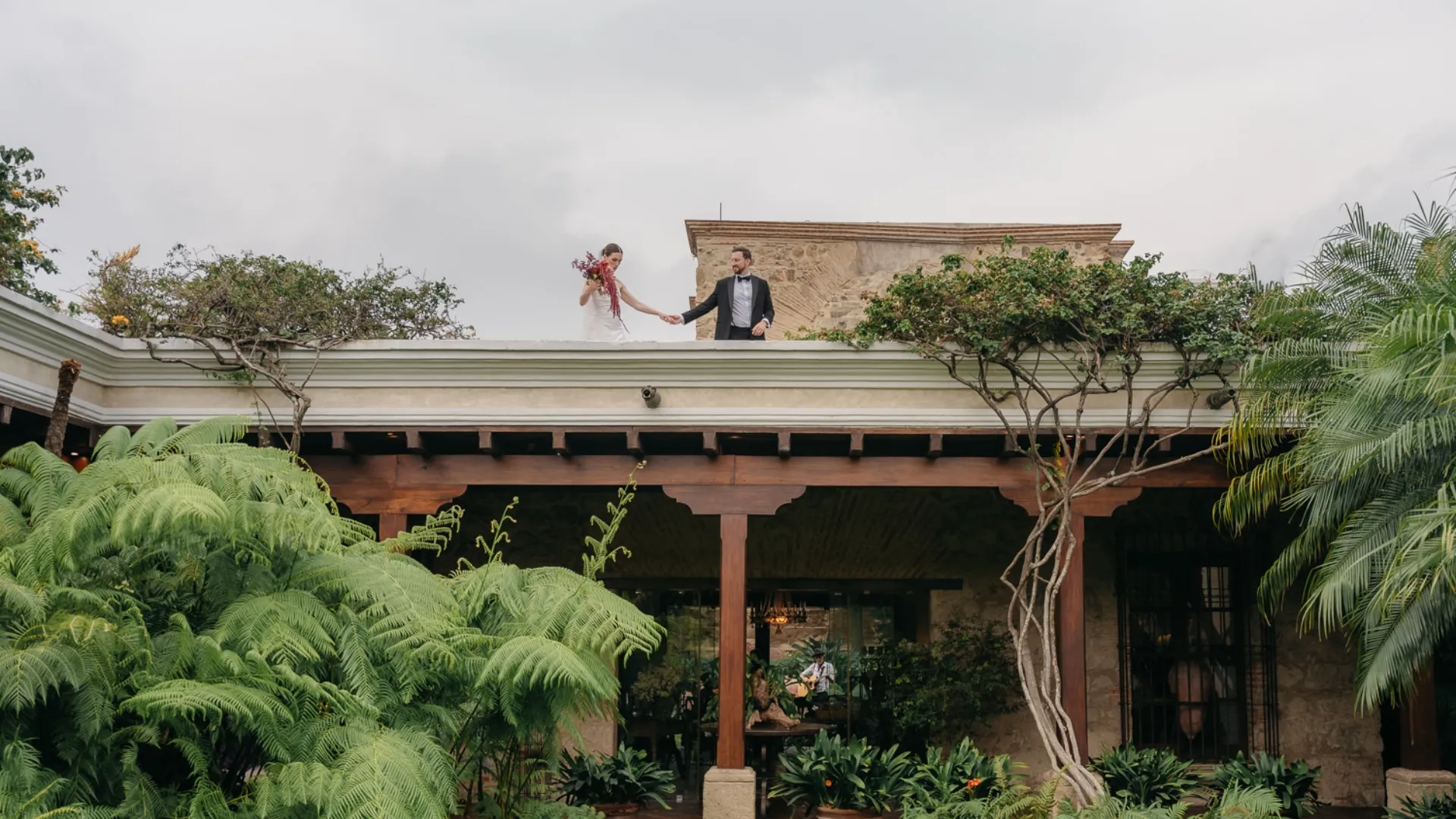
Photography by Daniel Lopez Perez


Wedding photo prompts are simple directions you give couples to create natural interaction, genuine emotion, and photos that don’t feel stiff or overly posed.
In this guide you’ll get 30 copy-and-paste prompts, a fast 10-minute prompting workflow, and a simple prompt ladder that helps you move naturally from relaxed interactions to more romantic or playful moments.
Save the prompts for your next shoot:
- [Printable PDF] Save our free prompt list (opens in a new tab)
- [PHONE PDF] Save our free prompt list to your phone (opens in a new tab)
- [WORD DOC] Editable Word doc version of the prompt list
Looking for a specific topic related to wedding photo prompts? Use these links to jump straight there:
→ Jump to: Wedding Photo Prompts Cheat Sheet (30 Copy/Paste Prompts)
→ Jump to: The 10-Minute Prompting Flow
→ Jump to: The Prompt Ladder: Getting People to Relax
Related Wedding Shot List Guides
Prompts work best when they’re part of a complete workflow. Start by knowing which photos you need, learn how to build clean poses, then use prompts to bring those poses to life naturally.
| If you’re trying to… | Start here |
|---|---|
| Build a complete wedding shot list | Wedding Shot List |
| Learn the foundations of posing | Wedding Photo Poses |
| Pose couples with confidence | Wedding Couple Poses |
| Help camera-shy couples relax | Awkward Couple Photoshoot |

Wedding Photo Prompts Cheat Sheet (30 Copy/Paste Prompts)
Save all 30 prompts:
- [Printable PDF] Save our free prompt list (opens in a new tab)
- [PHONE PDF] Save our free prompt list to your phone (opens in a new tab)
- [WORD DOC] Editable Word doc version of the prompt list
These prompts are designed to be spoken out loud.
Make sure to give one direction at a time. Allow the response to unfold, then change the eyes or your angle before choosing another prompt.
Also, make sure to ask about preferred contact and any movement limitations.
6 Low-Pressure, Camera-Shy Safe Prompts (Start with These)
- “Hold hands and walk slow—like you’re heading to the ceremony.”
- “Stand close. Take a breath. Look at each other for one second.”
- “Bring your foreheads close—don’t touch yet—now gently touch.”
- “Put your hands where they feel natural and just settle in for a beat.”
- “One of you look at me, the other look at them.”
- “Lean in like you’re about to whisper—then just smile and hold.”
6 Soft Romantic Prompts
- “Hold each other close and sway like you’re slow dancing.”
- “Nose-to-nose. Close your eyes for a second.”
- “Give them a forehead kiss, then stay there.”
- “Wrap them up like you’re warming them up—hold it.”
- “Whisper ‘I’m so glad it’s you’—then look back at me.”
- “Hands on the waist. Pull them in. Breathe.”
6 Playful / Laugh Prompts
- “Bump hips—gently—like you’re trying to make the other person laugh.”
- “Rock-paper-scissors. Winner gets a kiss on the cheek.”
- “Try to make them laugh without touching.”
- “Walk together and argue about what to eat later.”
- “Give them your best ‘we did it’ look, then pull them in.”
- “Spin them in—then stop and pull them back close.”
6 Movement-Based Prompts
- “Walk toward me slow. Don’t look at me… now look up.”
- “Walk away from me, then look back over your shoulder at each other.”
- “Take three steps, stop, and pull them in close.”
- “Slow spin—then freeze when you land.”
- “Lead them forward by the hand—then switch who leads.”
- “Start close, step apart one inch, then come back together.”
6 Editorial Wedding Photography Prompts
- “Relax into your body like you’re waiting for the bus.”
- “Walk together and hold onto each other like you’re cold.”
- “Hold hands and spin around in a circle”
- “Whisper into their ear and tell them your favorite breakfast food/candy/vegetable.”
- “One person sits and then the other plops on top of them to make them laugh.”
- “Sit down like you’re about to watch a romantic movie together”

Poses vs. Prompts, And When to Use Each
A pose is structure. It’s where feet go, what hands do, how close they stand, and how you keep people looking flattering and connected.
A prompt is interaction. It’s a simple action or idea that creates movement, emotion, or connection so the photo feels real instead of “posed.”
On a wedding day, I don’t treat these as either/or.
I use both, because prompts work best when the couple starts from a clean base.
The part photographers don’t always talk about is what happens between the pose and the prompt.
In practice, we do a lot of what I think of as micro-adjustments.
We get the couple into a comfortable pose, then make small fixes that improve the photo without making it feel overly directed. That might mean bringing their feet closer together, moving a hanging hand to a pocket or hip, or adjusting their spacing slightly.
We also create variation without rebuilding the entire setup. I might have them look somewhere different, switch who leads the interaction, go from serious to smiling, or vice versa.
Those small changes often create more variety than an entirely new pose, and they keep the session moving.
The Simple Rule
- Pose first to get structure and clean lines.
- Prompt second to get natural reactions.
- Shoot the transition (the moment they start moving is often the best frame).
What This Looks Like in Real Life
- Pose: “Stand close. Hands here. Weight on your back foot.” → Prompt: “Now sway like you’re slow dancing.”
- Pose: “Hold hands and face each other.” → Prompt: “Look at each other for one second, then look back at me.”
- Pose: “Foreheads close.” → Prompt: “Take a breath and smile like you’re keeping a secret.”
When to Lean More Pose-First
- They’re very stiff or nervous.
- You’re in a tight space or messy location.
- The light is harsh and you need control fast.
When to Lean More Prompt-First
- They’re already relaxed and connected.
- You have a little time and space to let moments happen.
- You want movement and emotion more than perfect symmetry.
The 30-Second Workflow (Repeat This)
- 1) Set the base: fix feet, hands, spacing, and face direction.
- 2) Give one prompt: one action, one sentence.
- 3) Let it land: shoot the start, the laugh, and the reset.
- 4) Change one thing: eyes or angle (not a whole new setup).
- 5) Move on: don’t overwork it.

The 10-Minute Prompting Flow
This is the flow for couple portraits I fall back on when time is tight and I still want photos that feel natural. The goal is to run a simple sequence, fast. Treat ten minutes as a planning guide. Allow time for setup, responses and resets, and adapt the pace to the couple. This is my default when you have enough time for a full set and want predictable variety without over-directing. Doing this creates variety without making couples feel like they’re performing. You get lots of natural shots this way, and that means lots of options later when editing.Step-by-Step 10-Minute Prompting Flow
- Lock one spot. Clean background, decent light. Tell them: “We’re staying right here for the whole set.”
- Set the base pose (10 seconds). “Stand close. Weight on your back foot. Hands here.” (Fix one thing at a time.)
- Run one movement prompt (10–15 seconds). “Hold hands and walk slow.” or “Take three steps, stop, and pull in.”
- Run one connection prompt (10–15 seconds). “Look at each other for one second.” or “Foreheads close—take a breath.”
- Grab the transition. Shoot the start, the laugh, the reset. The best frames often happen between “doing it” and “stopping.”
- Change one variable. Either change eyes (camera → each other) or change angle (take two steps left). Don’t rebuild the pose.
- Do one last prompt, then stop. If you’re ahead, add one playful prompt. If not, end on a clean frame and move on.
The 10-Second Direction Script (Copy/Paste)
- Base: “Stand close. Weight back. Hands comfortable.”
- Movement: “Hold hands and walk slow.”
- Connection: “Look at each other for one second.”
- Variation: “Now look at me… now back to each other.”
- Finish line: “One more and you’re done.”
If Time Collapses, Run This 3-Minute Mini-Flow
This is the emergency version—one clean frame, one movement prompt, one connection prompt, then you’re out.- 1) Clean base pose: stand close, hands placed, one strong frame.
- 2) One movement prompt: walk 5 steps or “three steps, stop, pull in.”
- 3) One connection prompt: “Foreheads close” or “look at each other,” then done.
The Prompt Ladder: Getting People to Relax
Not every couple wants the same vibe on camera.
Some are naturally affectionate. Some freeze the second you say “be romantic.”
This ladder helps you start safe, build connection gradually, and avoid the classic mistake: jumping straight to a high-intimacy prompt that makes everyone feel awkward.
Level 1: Low-Pressure
Use these when they’re stiff, nervous, or you’re just starting the set.
- “Hold hands and walk slow—stay close.”
- “Stand close and take a breath. No big performance. Just settle.”
- “One of you look at me, the other look at them.”
- “Lean in like you’re about to whisper—then just smile and hold.”
If it feels stiff, stay here and use movement. Don’t push romance yet.
Level 2: Soft Romantic
Move here when they’re warming up and the body language already looks comfortable.
- “Foreheads close—take a breath—hold it.”
- “Hands on the waist, pull in, and just breathe.”
- “Cheek-to-cheek for a second, then look at each other.”
- “Give a quick forehead kiss, then stay close.”
If a prompt feels too intimate, offer a softer option: “foreheads close” or “cheek-to-cheek.”
Level 3: Playful
Use these when they’re relaxed enough to move and laugh without feeling self-conscious.
- “Bump hips—gently—like you’re trying to make the other person laugh.”
- “Rock-paper-scissors. Winner gets a kiss on the cheek.”
- “Walk together and debate about what to eat later.”
- “Spin them in—then stop and pull them back close.”
Playful prompts work best when they’re short. Run it for 10 seconds, then move on.
Level 4: Higher Intimacy—Only If It Fits
These are great for couples who are naturally affectionate, but they can flop hard with camera-shy couples.
- “Slow kiss, then stay close and smile.”
- “Whisper something to each other, then look back at me.”
- “Wrap them up and don’t let go for a second.”
Quick comfort rule: if you’re not sure, give choices. “Want to do a forehead kiss, or just cheek-to-cheek?”
What to Do When a Prompt Flops
- Go simpler: switch back to Level 1 movement (walk, sway, pull-in).
- Give one instruction: don’t stack prompts trying to “fix it.”
- End on a clean frame: if the vibe is off, grab a solid hero and move on.
- Communicate: if you feel like this prompt doesn’t represent who you are, or doesn’t feel comfortable to you, please let me know.

Prompts by Outcome
When couples start to feel awkward, the fix is rarely “more prompts.”
It’s usually going with a single, better prompt, then letting it land.
I recommend using this section like a menu.
Pick the outcome you want, choose one prompt, and run it once or twice—then move on.
If You Want Genuine Smiles
- “Tell them one thing you’re excited about today.”
- “Say ‘we did it’ and pull them in close.”
- “Tell them your favorite part so far—quick.”
- “Look at each other like you’re keeping a secret.”
- “Whisper ‘I’m so glad it’s you’—then look back at me.”
If You Want Movement but Without Chaos
- “Hold hands and walk slow—stay close.”
- “Take three steps, stop, and pull them in.”
- “Sway like you’re slow dancing.”
- “Lead them forward by the hand—then switch who leads.”
- “Start close, step apart one inch, then come back together.”
If You Want ‘Close’ Without Awkward PDA
- “Foreheads close—take a breath—hold it.”
- “Cheek-to-cheek for a second, then look at each other.”
- “Hands on the waist—pull in—just breathe.”
- “Nose-to-nose—close your eyes for one second.”
- “Wrap them up like you’re warming them up—hold it.”
If You Want Playful Energy / Real Laughs
- “Bump hips—gently—like you’re trying to make them laugh.”
- “Rock-paper-scissors. Winner gets a kiss on the cheek.”
- “Try to make them laugh without tickling.”
- “Walk together and argue about what to eat later.”
- “Spin them in—then stop and pull them back close.”
If You Want a Quick ‘Details’ Moment
- “Hold hands and take one step together—let the dress move.”
- “Turn slightly and look down for one second—then back to each other.”
- “Adjust the veil together, then freeze close.”
- “Hands together at the bouquet for one clean frame—then look at each other.”
The One-Prompt Rule
- Give one prompt at a time.
- Run it for 10–15 seconds.
- Then change one thing (eyes or angle) instead of inventing a whole new idea.
Wedding Day Reality Checks—So You Don’t Lose Time
Most couples don’t need more prompts.
They need you to pick the right prompt for the time and vibe you actually have.
Use this table as your guardrail.
It’s not a new system. It’s a quick way to choose what to run and what to skip based on the time you actually have.
Pick a time block, run the mini-sequence, and stop before it gets stale.
| Time You Have | What to Run (In Order) | What to Skip |
|---|---|---|
| 3 minutes |
| Playful prompts, spins, multiple variations, location changes |
| 8–12 minutes |
| Stacking prompts, rebuilding poses, “one more idea” spirals |
| 15+ minutes |
| More than one “fun” concept, long talking, anything that feels forced |
If They’re Stiff or Nervous
- Start with movement. Walking and swaying create natural hands and faces faster than “be romantic.”
- Use low-pressure prompts first: “Take a breath,” “look at each other for one second,” “lean in like you’re about to whisper.”
- Keep your direction to one sentence. Too much talking makes people feel watched.
If They Seem to Hate PDA
- Use “close” prompts that don’t require kissing: foreheads close, cheek-to-cheek, hands on waist, slow sway.
- Offer choices: “Want to do forehead-close, or cheek-to-cheek?”
- Skip anything that asks for private/sexual whispering. It’s high-risk and rarely necessary.
If the Location Is Ugly or Crowded
- Don’t move locations mid-set. Change your angle or tighten your framing instead.
- Use prompts that work in place: sway, pull-in, “one step together,” “three steps then stop.”
- Keep them close so the background matters less, and shoot slightly tighter for cleaner frames.

Common Prompt Mistakes and How to Fix Them
Prompts can make photos feel effortless—or super awkward. Most “bad prompts” fail for one of two reasons:- They’re too complicated
- They push intimacy before the couple is comfortable
Mistake: Stacking Prompts (Too Many Instructions at Once)
- Don’t say: “Walk toward me, look at each other, laugh, then spin, then kiss.”
- Say this instead: “Hold hands and walk slow.” (Then after 10 seconds: “Now look at each other.”)
- Don’t say: “Get close, whisper something, then look at me, then look away.”
- Say this instead: “Stand close and take a breath.”
Mistake: Starting Too Intimate
- Don’t say (right away): “Make out like nobody’s watching.”
- Say this instead: “Foreheads close—take a breath—hold it.”
- Don’t say (right away): “Whisper something sensual.”
- Say this instead: “Whisper something sweet, then look back at me.”
Mistake: Prompts That Exclude One Partner
- Don’t say: “Tell them your favorite memory from college.” (If one person wasn’t there, it can feel weird.)
- Say this instead: “Tell them one thing you’re excited about today.”
- Don’t say: “Tell them an inside joke.”
- Say this instead: “Say ‘we did it’ and pull them in close.”
Mistake: Over-Talking (Killing the Moment)
- Don’t do: narrate what you want for 30 seconds while they stand there waiting.
- Do this: one sentence, then silence. Let them react and shoot the in-between.
- Try: “Hold hands and walk slow.” Then stop talking and shoot.
Mistake: Prompts That Need Space You Don’t Have
- Don’t do: big spins or running prompts in a crowded hallway.
- Do this instead: in-place movement: “Sway like you’re slow dancing” or “Three steps, stop, pull in.”
- Swap: “Walk 20 feet” → “Walk 5 steps.”
Mistake: Fixing Too Much While They’re Reacting
- Don’t do: constant micro-corrections mid-laugh (“chin down, hand here, turn more”).
- Do this: shoot the moment, then reset one thing and run the prompt again.
- Rule: fix structure before the prompt, not during it.
Wedding Photo Prompts FAQ
Here are answers to some of the questions I see come up a lot about prompting for wedding photographers.
How many wedding photo prompts do I actually need?
You need fewer than you think. If you have a solid base pose and a simple flow, you can get great variety using 2–4 prompts in a short couple block.
The cheat sheet is there so you’re never stuck—but you don’t need to run all 30 in one session.
How long should I run a prompt?
Usually 10–15 seconds is enough. Shoot the start, the reaction, and the reset, then change eyes or angle and move on.
What if the couple freezes or feels awkward?
Go simpler and use movement. Walking, swaying, and “three steps, stop, pull in” create natural hands and faces fast.
Keep your direction to one sentence, then stop talking and let them react.
Are prompts better than poses?
Not really. A pose gives you structure and flattering basics. A prompt gives you interaction and real emotion.
The fastest system is: pose first, prompt second.
How do I avoid prompts that feel cringe?
Use the prompt ladder. Start low-pressure, move to soft romantic only if it fits, and save higher-intimacy prompts for couples who are already comfortable.
When in doubt, offer options: “Foreheads close, or cheek-to-cheek?”
Can I use these prompts for engagement photos too?
Yes. Engagement sessions usually give you more time, but the same system works: base pose → one prompt → micro-variation → move on.
What’s the biggest mistake photographers make with prompts?
Stacking multiple instructions at once. One prompt, one sentence. Let it land. Then change one thing and go again.

 Español