

Shutter speed controls how movement looks in your photos.
- A faster shutter speed can freeze a runner, a dancing couple, or splashing water.
- A slower shutter speed lets movement show as blur, from a slight softness to long streaks and motion trails.
Shutter speed also affects exposure: faster shutter speeds record less light, while slower shutter speeds record more.
So when a photo looks blurry, the problem isn’t always focus. The subject may have moved during the exposure, the camera may have moved—or the blur may be exactly the effect you intended.
Choose a shutter speed based on how you want movement to look, then account for camera shake and available light.
→ Jump to: What Shutter Speed Actually Does
→ Jump to: How to Choose the Right Shutter Speed
Explore Shutter Speed in More Detail
Use these guides to go deeper on slower and faster shutter speeds, intentional motion blur, and shutter-speed control.
| If you want to… | Start here |
|---|---|
| Use slower shutter speeds intentionally | Slow Shutter Speed |
| Freeze fast-moving subjects | Fast Shutter Speed |
| Create intentional blur with moving subjects | Motion Blur Photography |
| Control shutter speed while your camera manages aperture | Shutter Priority Mode |
What Is Shutter Speed?
Shutter speed is the amount of time your camera records light during an exposure.
A fast shutter speed records a very short slice of time, which can freeze a basketball player mid-jump or stop splashing water.
A slow shutter speed records movement for longer, which can smooth flowing water, streak car lights, or create motion trails on a dance floor.
So shutter speed affects two things at once:
- Exposure: longer exposures record more light; shorter exposures record less.
- Motion: longer exposures allow more movement to be recorded; shorter exposures can freeze movement.
That creates a practical tradeoff.
If you use a faster shutter speed to freeze movement, you may need to compensate for the reduced light with aperture, ISO, or added light.
But if you slow the shutter to gather more light, you also increase the possibility of blur from subject movement or camera shake.
A bright photo with unintended motion blur isn’t necessarily a successful exposure. When movement matters, your shutter speed needs to be fast enough for the result you want.
Why It’s Called “Shutter Speed”
“Shutter speed” describes what is really an exposure duration.
A fast shutter speed means a short exposure.
A slow shutter speed means a longer exposure.
| Shutter Speed | Exposure Duration | Effect on Motion |
|---|---|---|
| 1/1000 | Very short | Can freeze fast action |
| 1/250 | Short | Can freeze moderate movement |
| 1/30 | Longer | More opportunity for visible movement |
| 1 second | Long | Records substantial movement |
These aren’t thresholds for sharpness—the result also depends on how fast the subject is moving, whether the camera moves during the exposure, and what you want the motion to look like.
How Shutter Speed Affects Brightness and Motion
Shutter speed creates a tradeoff between light and motion.
A faster shutter speed can freeze more movement but records less light. A slower shutter speed records more light but gives movement more time to appear in the image.
The right choice depends on what you’re photographing and whether you want that movement to look sharp or blurred.

Brightness
A slower shutter speed records more light because the sensor is exposed for longer. A faster shutter speed records less light because the exposure ends sooner.
If you need a faster shutter speed in low light, you may need to compensate by opening the aperture, raising ISO, or adding light.
Slowing the shutter can give you more light instead, but whether that’s practical depends on subject movement, camera movement, focal length, and stabilization.
Motion Blur
Motion blur occurs when the subject changes position while the exposure is being recorded.
A shorter exposure gives the subject less time to move across the frame, which can help freeze action. A longer exposure records more of that movement, creating blur or streaking.
That blur can be a problem or a creative choice.
A waterfall photographed at 1 second can become smooth and flowing. A wedding dance floor photographed at 1/15 can use visible movement to convey energy.
The question isn’t whether blur is inherently good or bad. It’s whether the amount of motion in the image matches what you intended.
Camera Shake
Camera shake is different from subject motion: the blur comes from the camera moving during the exposure.
Focal length affects how visible that movement becomes. At longer focal lengths, the narrower angle of view magnifies the effect of small camera movements, so a shutter speed you can handhold successfully at 24mm may not produce the same result at 200mm.
Subject motion, camera shake, and missed focus can all make a photo look soft, but they require different fixes.

Stabilization can compensate for camera movement, but a moving subject can still blur if the shutter speed records too much of that movement.
Instead of looking for one technically “correct” shutter speed, decide how you want movement to appear. Then balance that shutter speed against the light available and the other exposure settings.
How to Read Shutter Speed on Your Camera
Cameras often shorten fractional shutter speeds on the display.
Instead of showing 1/500 second, your camera may simply show 500.
So:
- 2000 = 1/2000 second
- 500 = 1/500 second
- 125 = 1/125 second
- 30 = 1/30 second
When you’re reading these as fractions, a larger displayed number means a shorter—and therefore faster—exposure. For example, 1/1000 second is much shorter than 1/30 second.
| Camera Display | Shutter Speed | Exposure Duration |
|---|---|---|
| 2000 | 1/2000 second | Very short |
| 500 | 1/500 second | Short |
| 125 | 1/125 second | Longer |
| 30 | 1/30 second | Longer still |
Whole Seconds and Long Exposures
For longer exposures, cameras typically use a quotation mark to indicate whole seconds:
- 1″ = one second
- 2″ = two seconds
- 5″ = five seconds
- 15″ = fifteen seconds
These longer exposures can be used for effects such as light trails, smooth water, and other intentional motion blur.
Because the camera has much more time to move during the exposure, long exposures are commonly made with a tripod or other support when a sharp stationary scene is the goal.
Understanding Stops of Shutter Speed
A full stop of shutter speed doubles or halves the exposure time—and therefore doubles or halves the amount of light recorded, all else being equal.
| Change | Exposure Time | Light Recorded |
|---|---|---|
| 1/500 → 1/250 | Doubles | Twice as much |
| 1/250 → 1/125 | Doubles | Twice as much |
| 1/125 → 1/250 | Halves | Half as much |
If you change shutter speed but want to maintain roughly the same brightness, you can compensate with aperture, ISO, or the amount of light in the scene.
Fast vs. Slow Shutter Speed
Fast and slow shutter speeds record different amounts of movement.
A faster shutter speed records a shorter slice of time, making it easier to freeze a moving subject and reduce blur from camera shake. A slower shutter speed records movement for longer, allowing blur and streaking to become visible.
Neither is inherently better. The useful choice depends on how you want movement to appear and how much light you have available.
When to Use a Fast Shutter Speed
Use a faster shutter speed when keeping movement sharp matters more than recording it as blur.
That can be useful for:
- sports and wildlife
- running kids or pets
- wedding receptions and dance floors
- moving subjects in street photography
- handheld shooting where camera shake is a concern
- telephoto photography, where camera movement is more noticeable
Faster action generally requires a shorter exposure to appear frozen.
Longer focal lengths can also require more attention to shutter speed when you’re shooting handheld because small camera movements become more visible.
The tradeoff is light: shortening the exposure records less of it, so you may need a wider aperture, higher ISO, or more light to maintain the brightness you want.
When to Use a Slow Shutter Speed
Use a slower shutter speed when you want movement to remain visible or when a longer exposure is practical for the scene.
Common uses include:
- smooth water
- light trails
- intentional motion blur
- panning
- long exposures in low light
- creative dance-floor photography
Of course, blur isn’t always a mistake.
A moving subject can be rendered sharply with a short exposure or allowed to blur with a longer one. What matters is getting the shot you want, on purpose.
When sharpness is the goal, unintended subject motion or camera shake is a problem.
When visible movement is the goal, that same blur can become part of the composition.
| Goal | Shutter-Speed Direction | What Changes |
|---|---|---|
| Freeze subject movement | Faster | Less subject movement is recorded |
| Reduce camera-shake blur | Faster | Less camera movement is recorded |
| Show subject movement | Slower | More movement is recorded |
| Record more available light | Slower | Longer exposure, with more opportunity for movement to appear |
How to Choose the Right Shutter Speed
There isn’t one correct shutter speed for a scene.
The useful shutter speed is one that records movement the way you intend while giving you a workable exposure.
Choose shutter speed based on the movement you want to record. Then make sure to account for camera shake and available light.
Here’s a practical guide on how to choose:
- Decide how you want movement to look. Do you want to freeze it or let some motion show?
- Consider how the subject is moving. Faster movement generally requires a shorter exposure if you want the subject sharp.
- Account for camera shake. Focal length, stabilization, camera support, and your ability to hold the camera steady all affect how slow you can shoot before camera movement becomes visible.
- Balance the exposure. If the shutter speed you need doesn’t give you enough light, adjust aperture, ISO, or the light in the scene rather than automatically sacrificing the motion rendering you want.

Decide How You Want Movement to Look
Start by deciding whether you want to freeze movement or let some of it show.
If you want a moving subject sharp, you’ll generally need a shorter exposure.
If visible movement is part of the photograph—a panning shot, motion-blurred dance floor, light trails, or smooth water—you can deliberately use a longer one.
Consider the Subject’s Movement
If you want the subject sharp, the shutter speed you need depends on how the subject is moving.
A standing portrait can usually tolerate a longer exposure than a walking person, while running, jumping, dancing, and other faster movement generally require shorter exposures.
But speed isn’t the only factor.
The direction of movement, distance from the subject, framing, and how much blur you’re willing to accept can all affect the result.
The shutter-speed chart below gives practical starting points for different types of movement.
Practical Shutter Speed Starting Points
Use these as starting points, then adjust for the subject’s actual movement and the amount of blur you want.
| Situation | Typical Starting Shutter Speed | Main Goal |
|---|---|---|
| Still portraits | 1/125 | General sharpness handheld |
| Walking subjects | 1/250 | Reduce motion blur |
| Kids and pets | 1/500 | Freeze unpredictable movement |
| Wedding ceremony movement | 1/250–1/500 | Keep people sharp while moving |
| Wedding dance floor | 1/80–1/250 | Balance motion and atmosphere |
| Sports and action | 1/1000+ | Freeze fast movement |
| Birds in flight | 1/2000+ | Freeze rapid motion |
| Panning shots | 1/15–1/60 | Controlled motion blur |
| Water blur / waterfalls | 1/2 second to several seconds | Smooth flowing movement |
| Tripod night photography | Several seconds+ | Gather light intentionally |
These aren’t fixed rules, just general guidelines.
Subject speed, shooting distance, direction of movement, focal length, stabilization, and your intended amount of blur can all change the shutter speed you need.
Check Your Focal Length and Camera Shake Risk
Even if the subject isn’t moving, the camera can move during the exposure.
Camera shake becomes more noticeable at longer focal lengths, so handheld shooting with a telephoto lens generally requires more attention to shutter speed.
A traditional starting guideline is the reciprocal rule: use a shutter speed of roughly 1 divided by the focal length when shooting handheld.
For example:
- 50mm → around 1/50 second
- 200mm → around 1/200 second
Treat this as a starting point for managing camera shake, not a guarantee of sharpness.
Stabilization can allow slower handheld shutter speeds in some situations, while subject movement still requires its own consideration.
Balance the Exposure
Once you’ve chosen a shutter speed for the way you want movement to look, check whether it gives you a workable exposure.
If the image is too dark, you can:
- open the aperture
- raise ISO
- add light
You can also use a slower shutter speed, but doing so changes how movement is recorded.
Whether that tradeoff makes sense depends on the photograph you’re trying to make.
Common Shutter Speed Mistakes
Once you understand how shutter speed records movement, the most useful mistakes to watch for are the ones that can push you away from the result you actually want.
Letting Exposure Dictate Shutter Speed
In low light, it’s tempting to slow the shutter simply because the image is too dark.
But if you want a moving subject sharp, that can solve the brightness problem while creating a motion-blur problem.
Choose a shutter speed that produces the motion rendering you want, then use aperture, ISO, or added light as needed to balance the exposure.
If you deliberately want more motion blur, slowing the shutter may be exactly the right choice.
Treating Shutter Speed Charts as Rules
Shutter-speed charts provide starting points, not guarantees.
The result can change with:
- how fast the subject is moving
- the direction of that movement
- shooting distance and framing
- focal length
- camera movement and stabilization
- the amount of blur you want
Use a chart to choose an initial setting, then evaluate the result and adjust.
If you want less subject-motion blur, shorten the exposure. If camera shake is the problem, a faster shutter speed, stabilization, or better camera support can help.
Assuming Flash Automatically Eliminates Motion Blur
Flash can help freeze movement because the burst of light may be much shorter than the shutter speed. But that doesn’t mean every flash photo will have no motion blur.
If ambient light contributes enough to the exposure, movement recorded by that ambient light can still appear as blur or trails around a flash-lit subject. Photographers can also use that effect deliberately, as in dragged-shutter dance-floor photography.
Shutter speed therefore still matters when you’re using flash: it affects how long ambient light and movement are recorded, while the flash adds its own brief burst of light.
How Shutter Speed Works With Aperture, ISO, and Camera Modes
Changing shutter speed changes exposure as well as motion rendering. If you shorten the exposure to freeze more movement, less light is recorded. To maintain similar brightness, you can open the aperture, raise ISO, add light, or use some combination of the three.Shutter Speed and Aperture
A wider aperture records more light, which can help support a faster shutter speed in low light. But aperture also controls depth of field. Opening the aperture may give you the light you need while making less of the scene appear acceptably sharp. And that tradeoff can be useful. If freezing movement matters more than keeping a large depth of field, a wider aperture may be a practical way to support the shutter speed you need.Shutter Speed and ISO
Raising ISO can also support a faster shutter speed when light is limited. The tradeoff is image quality: higher ISO can increase visible noise and reduce image quality, with the amount and appearance varying by camera and exposure. If you need a shorter exposure to render movement the way you want, raising ISO may be preferable to slowing the shutter and introducing unwanted motion blur.Choosing a Camera Mode
Camera modes determine which exposure settings you control directly and which the camera can adjust for you.| Mode | You Set | Camera Can Adjust | Useful When |
|---|---|---|---|
| Shutter Priority | Shutter speed | Aperture | You want direct control over how movement is rendered |
| Aperture Priority | Aperture | Shutter speed | You want direct control over depth of field |
| Manual Mode | Shutter speed and aperture | Neither automatically for exposure; ISO may still be automated if Auto ISO is enabled | You want shutter speed and aperture to remain fixed until you change them |
Shutter Speed FAQ
Here are answers to the questions I see most commonly asked by photographers about shutter speed.
What is shutter speed in photography?
Shutter speed is the amount of time your camera records light during an exposure. It affects both image brightness and how movement appears in the photo.
A shorter exposure records less light and less movement. A longer exposure records more light and gives movement more time to appear as blur or streaking.
What shutter speed is best for beginners?
There isn’t a special shutter speed that’s best for beginners. Choose the shutter speed based on subject movement, camera-shake risk, and how you want motion to appear.
For a relatively still subject, around 1/125 second can be a useful starting point for handheld photography, provided it’s also appropriate for your focal length and ability to hold the camera steady. Moving subjects generally require shorter exposures if you want them sharp.
What is considered a fast shutter speed?
There isn’t a precise dividing line, but 1/500 second and shorter exposures such as 1/1000 or 1/2000 are commonly described as fast shutter speeds.
They’re useful when you want to freeze movement, reduce subject-motion blur, or reduce the effects of camera movement.
What is considered a slow shutter speed?
There isn’t a universal cutoff for a slow shutter speed either. Exposures around 1/30 second and longer are often described as slow because movement has more time to become visible.
Slow shutter speeds can be used intentionally for effects such as panning, light trails, smooth water, and creative motion blur. They also record more available light than a faster shutter speed at the same aperture and ISO.
Why are my photos blurry even when focus looks correct?
A photo can be accurately focused and still look blurry if the subject or camera moves during the exposure.
Look at the pattern of blur. If a moving subject is blurred while stationary parts of the scene remain sharp, subject motion may be the cause. If the whole image shows similar directional blur or softness, camera movement may be responsible.
Missed focus, subject motion, and camera shake can produce similar-looking problems, but they require different fixes.
Does image stabilization freeze motion?
No. Image stabilization compensates for camera movement; it does not stop a moving subject from changing position during the exposure.
That means stabilization may help you handhold the camera at a slower shutter speed when photographing a stationary subject, but you may still need a faster shutter speed to keep a moving subject sharp.
What shutter speed freezes motion?
There isn’t one shutter speed that freezes every kind of movement.
The shutter speed you need depends on factors such as how fast the subject is moving, its direction of movement, your distance and framing, and how completely you want to freeze it.
Around 1/500 second can be a useful starting point for many moderately moving subjects, while fast sports, wildlife, or birds in flight may call for 1/1000, 1/2000, or faster. Check the result and adjust rather than treating those numbers as fixed thresholds.
What shutter speed should I use at a wedding reception?
Choose the shutter speed based on what is happening and how you want the movement to look rather than using one reception setting all night.
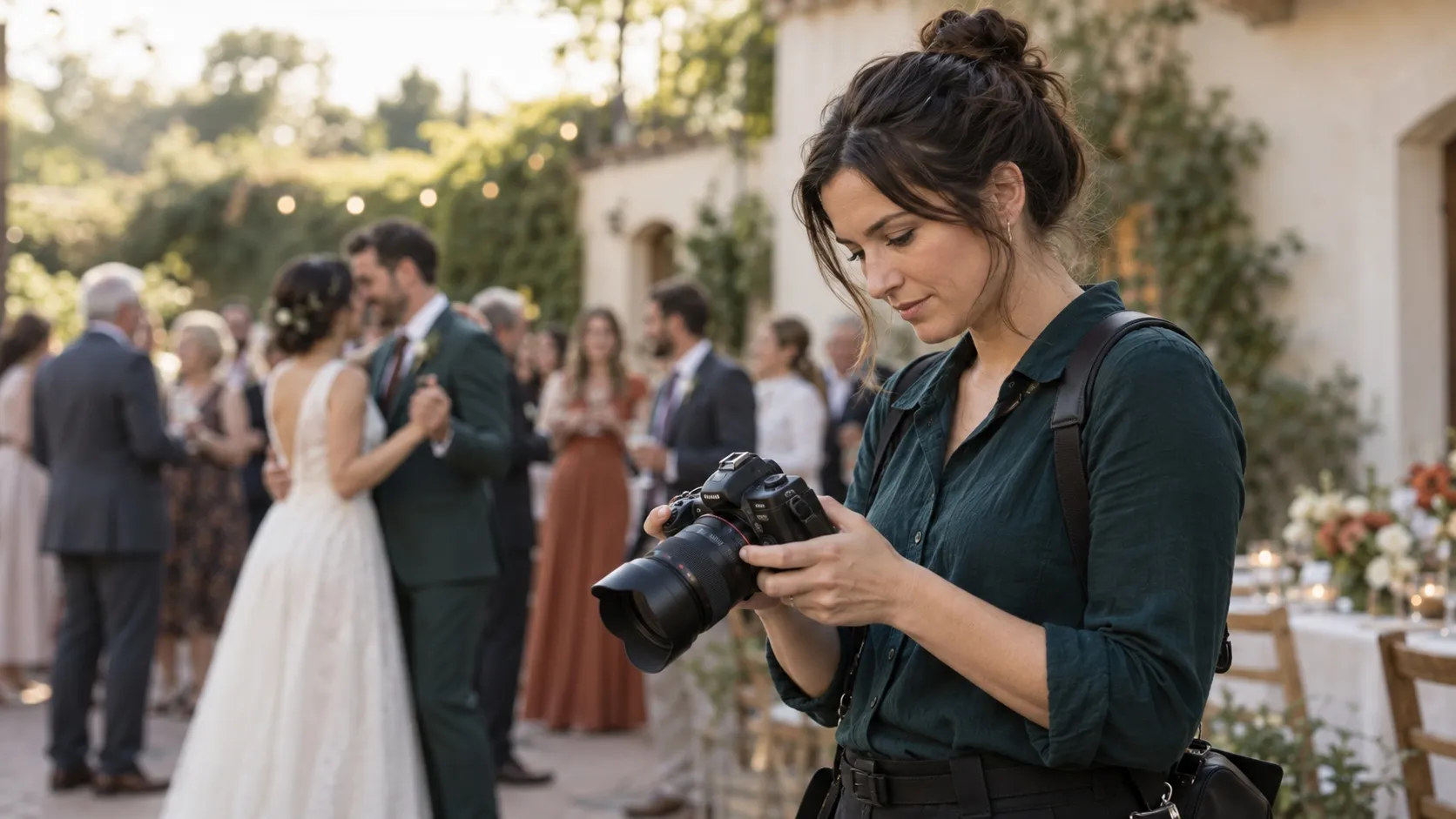
If you want to freeze dancing and other fast movement, a shorter exposure such as 1/500 second can be a useful starting point. For slower movement, you may be able to work at slower shutter speeds while still keeping subjects acceptably sharp.
If you want intentional motion blur, you can go much slower. Shutter speeds around 1/15–1/60 second can be used creatively on a dance floor, often with flash, camera movement, or both.
Available light, flash, focal length, subject movement, and your intended effect all influence the final choice.
What is the reciprocal rule?
The reciprocal rule is a traditional starting guideline for reducing camera-shake blur when shooting handheld. It suggests using a shutter speed of roughly 1 divided by your focal length.
For example:
- 50mm → around 1/50 second
- 200mm → around 1/200 second
Treat the rule as a starting point rather than a minimum that guarantees sharpness. Camera stabilization, sensor format, resolution, shooting technique, and how the image will be viewed can affect the result.
The reciprocal rule also addresses camera shake, not subject motion. A moving subject may require a much faster shutter speed even when you’re well within the guideline.
Is faster shutter speed always better?
No. A faster shutter speed can freeze more movement and reduce camera-shake blur, but it also records less light.
A slower shutter speed may be the better choice when you need a longer exposure or deliberately want movement to appear in the photograph.
The goal isn’t to use the fastest shutter speed possible. It’s to use a shutter speed that records movement the way you want while giving you a workable exposure.


 Español