

Photography by Daniel Lopez Perez


Fine art wedding photography is a style of shooting weddings that people talk about a lot, but I think the term is often misused.
Sometimes people use “fine art” to mean light and airy.
Sometimes they mean film.
And sometimes it’s just a way of saying “premium” or “high quality.”
But in practice, fine art wedding photography is more specific than that: it’s a curated, print-first approach built around clean composition, intentional light, and a cohesive visual voice—usually supported by calm direction and a repeatable process.
(If you’re a couple who landed here: “fine art” usually means your photos will feel polished, intentional, and gallery-ready.)
→ Jump to: What Photographers Usually Mean By Fine Art Wedding Photography
→ Jump to: Is Fine Art Wedding Photography a Good Fit for You?
Related Wedding Photography Styles
Not sure where fine art fits? Start with our guide to Wedding Photography Styles, then explore the styles photographers most often compare with fine art coverage.
| If you’re comparing… | Start here |
|---|---|
| Fine Art vs. Editorial Wedding Photography | Editorial Wedding Photography |
| Fine Art vs. Artistic Wedding Photography | Artistic Wedding Photography |
| Fine Art vs. Light & Airy Wedding Photography | Light & Airy Wedding Photography |
What Is Fine Art Wedding Photography?
Fine art wedding photography is curation-first.
You’re not just documenting what happened.
You’re building a cohesive set of images that hold up as prints: clean compositions, intentional light, refined moments, and a consistent visual voice from start to finish.
Here’s the simplest working definition:
- Fine art wedding photography is: a curated, print-first approach that prioritizes clean composition, intentional light, and a cohesive visual voice, often supported by calm direction so the look is repeatable in real conditions.
- Fine art wedding photography is not: a preset, a film emulation, a synonym for light and airy, or an excuse for calling standard coverage “fine art.”
Editing can support the style, but it can’t create it.
If the frame isn’t refined in-camera—background control, edge control, light quality, and intentional composition—no edit will turn it into fine art.
What Photographers Usually Mean By Fine Art Wedding Photography
When photographers use the fine art label, they’re usually signaling four things:
- Curation over volume: fewer “everything that happened” frames and more intentional keepers that stand on their own.
- Print-first composition: balanced framing, clean layers, disciplined crops, and fewer distractions competing with the subject.
- Intentional light: softness and direction are prioritized (window light, open shade, controlled flash), not whatever light happens to be there.
- Repeatability: a process that produces the look across different venues, timelines, and lighting, rather than only in one perfect portrait spot.
That last point is the tell.
Anyone can make a few fine art-looking portraits in ideal light.
A fine art wedding photographer keeps the gallery cohesive when prep is messy, timelines compress, and the reception lighting is rough.
What Fine Art Wedding Photos Typically Look Like
Fine art wedding photos tend to feel polished and visually calm.
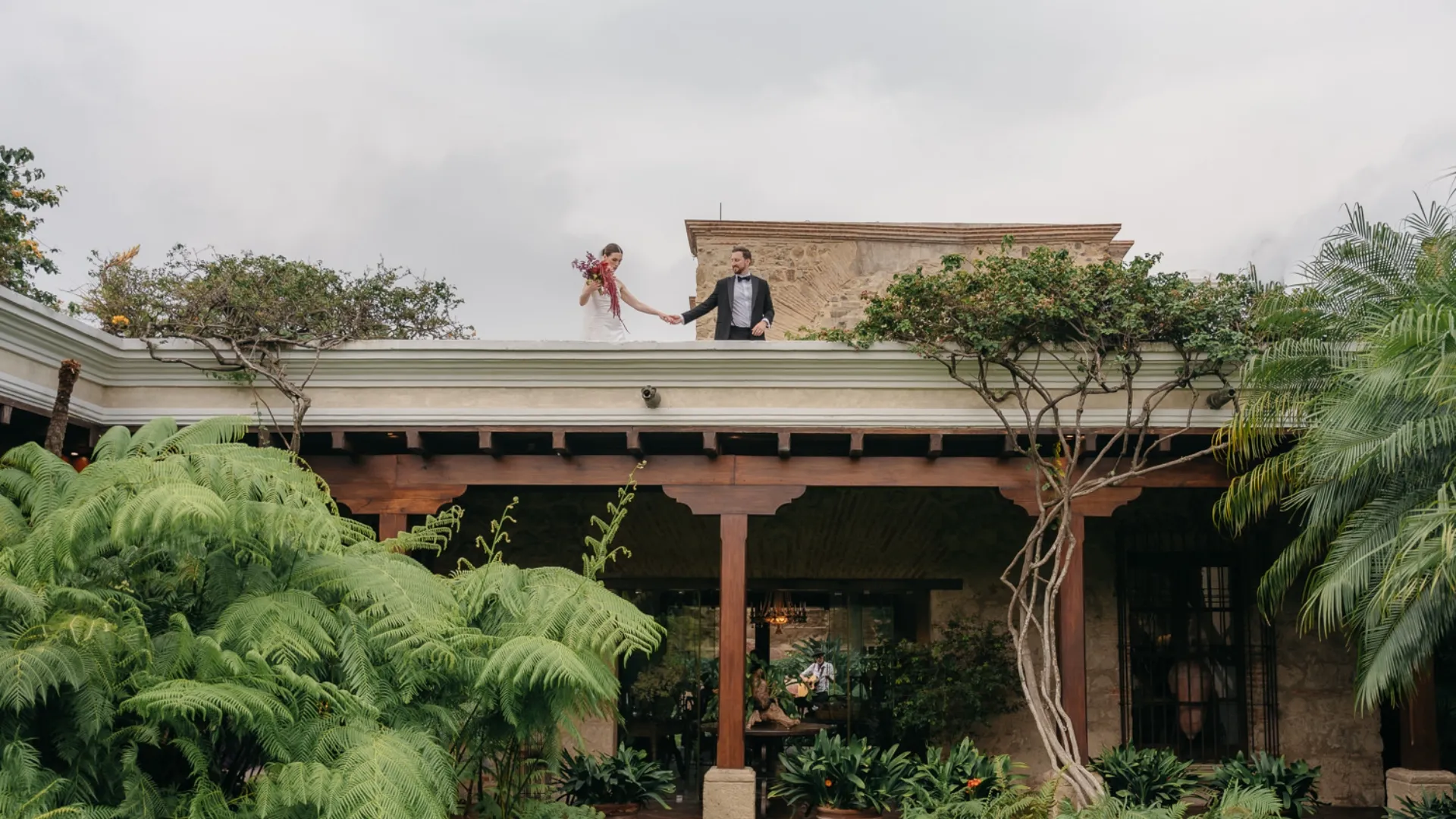
Even when the moment is candid, the frame feels chosen, showing us that the photographer knew where to stand, what to exclude, and how to protect the light.

- clean backgrounds and simplified scenes
- soft, directional light that shapes faces and fabric
- refined posing and gesture (not stiff posing, but intentional refinement)
- a cohesive edit that makes the day feel like one visual story
Common Visual Traits Of Fine Art Wedding Photos
These are the traits you can actually spot across a full wedding day:- Background discipline: fewer cluttered edges, fewer bright distractions, fewer “why is that there?” elements in the frame.
- Clean layering: foreground and background elements are used intentionally, not accidentally.
- Light quality over convenience: the photographer chooses positions that produce soft, directional light, even if it’s not the fastest option.
- Print-friendly framing: intentional negative space, stable horizons/verticals, and crops that feel composed.
- Refined gesture: hands, shoulders, posture, and spacing are adjusted just enough to feel elevated without looking forced.
- Cohesion under pressure: the look holds through prep, portraits, ceremony, and reception, and not just in highlights.

Fine Art vs. Artistic Wedding Photography
These labels overlap, but they aren’t interchangeable.
Artistic wedding photography is the umbrella term.
It describes work where the photographer’s point of view shapes the images in a visible way—sometimes through mood, abstraction, unconventional framing, or interpretive storytelling.
Fine art wedding photography is a narrower term that falls under the “artistic” umbrella.
It’s usually less about experimentation and more about refinement: curated frames, controlled light, and a cohesive, heirloom-forward presentation.
How Fine Art Wedding Photography Compares To Other Styles
A lot of confusion goes away when you separate the label from the look.
Fine art overlaps with several styles people use as shorthand—especially “editorial,” “documentary,” and look-based labels like “light and airy.”
But the differences matter, because they change what clients will expect you to deliver.
Here are the key differences:
- Fine art is about curation, clean composition, and a cohesive, print-first gallery.
- Editorial is about design-forward hero frames and higher direction.
- Light & airy is a look (often overlapping with fine art), but it isn’t the definition of the approach.
- Documentary is about storytelling and continuity across the day.
- Artistic is an umbrella—and fine art is one specific lane inside it.
This quick chart compares fine art to other styles to help provide some clarity:
| Style | Primary Focus | Direction Level | Common Misuse |
|---|---|---|---|
| Fine Art | Curated, print-first frames with cohesive polish | Medium | Used to mean “pretty editing” without curation, clean frames, or consistency across the day |
| Editorial | Design-forward hero images and fashion-inspired polish | High | Used as a trendy label without intentional direction and crafted deliverables |
| Light & Airy | A bright, soft aesthetic (more “look” than approach) | Varies | Treated like a full style definition when it’s really an edit/look that can sit on top of many approaches |
| Documentary | Story, context, and continuity across the full day | Low–Medium | Confused with fine art when the edit is clean, even if the priority is coverage and narrative |
| Artistic | Expression and interpretation (umbrella category) | Varies | Used as a vague badge when the work is mostly standard coverage with inconsistent creative swings |
Is Fine Art Wedding Photography a Good Fit for You?
Fine art wedding photography rewards photographers who like quiet control.
Not “bossy posing.”
More like: you notice what’s messy, you fix it fast, and you know how to shape a frame without turning the day into a photoshoot.
[Just getting started with wedding photography? Check out our guide on how to become a wedding photographer.]
It’s a good fit if you can deliver polish consistently across a range of factors like different venues, timelines, and lighting conditions.
Signs Fine Art Wedding Photography Is a Good Fit
- You naturally simplify scenes, moving clutter, shifting angles, and cleaning edges without being asked.
- You care about composition as much as emotion—where things sit in the frame matters to you.
- You prefer calm, repeatable direction over improvising in the moment.
- You enjoy editing for cohesion so a full gallery feels unified, not like a mix of styles.
- You like the idea of making images that hold up as prints, not just social highlights.
Signs You’ll Fight Fine Art All Day
- You get bored when portraits slow down and would rather chase unpredictable moments.
- You don’t want to direct at all. You want the day to unfold without intervention.
- You don’t enjoy managing backgrounds, light, or small details.
- You prefer variety over cohesion.
- You feel constrained by print-friendly expectations and want more grit, edge, or abstraction.
The Low-Stress Way to Test Fine Art Wedding Photography
- Pick one controlled window: details + one five-minute portrait block (no pressure, no timeline chaos).
- Make three frames on purpose: (1) a clean wide with intentional negative space, (2) a mid-frame with tidy layering, (3) a tight portrait with soft directional light.
- Do a distraction audit after: zoom out and scan the edges—does anything pull attention away (clutter, bright hotspots, awkward crops)?
- Check the set together: do the frames feel cohesive, calm, and print-worthy—or do they feel like standard coverage with prettier color?
Three Things Fine Art Wedding Photographers Prioritize
Fine art isn’t “I make everything pretty.”
It’s “I curate for polish and cohesion.”
- Composition and cleanliness: you protect the frame—backgrounds, edges, layers—so images feel calm and intentional.
- Light quality: you seek or shape soft directional light (window light, open shade, controlled flash) to create flattering, finished images.
- Cohesion across the whole day: you shoot and edit so prep, portraits, ceremony, and reception still feel like one voice.
Two Things Fine Art Wedding Photographers Deprioritize
- Spray-and-pray coverage: you still cover the day, but you’re not optimizing for maximum frames—you’re optimizing for maximum keepers.
- Chaos-as-style: you don’t rely on randomness or mess to make the gallery interesting.

How Photographers Actually Deliver Fine Art Wedding Photography
Fine art wedding photography isn’t just about taste.
It’s about control.
Control of light.
Control of composition.
Control of pacing.
Control of what makes it into the final gallery.
The photographers who deliver a fine art style consistently aren’t improvising on the fly. They’re protecting conditions that make polished images possible.
Direction Level
Fine art is usually guided.
Not stiff or over-posed. But intentional.
In practice, that often looks like:
- Cleaning the frame: moving chairs, closing doors, shifting angles to remove distractions.
- Refining posture: adjusting hands, shoulders, chin angle, spacing between bodies.
- Shaping light: choosing window direction, repositioning subjects, or using controlled flash to maintain softness.
Where the Work Happens
Most fine art success happens before the shutter click.
- Before moments: you scout usable light, identify clean backgrounds, and mentally mark portrait spots that will photograph well.
- During moments: you position yourself for cleaner layers and stronger light—even during fast transitions.
- After moments: you curate tightly. Not every frame makes the gallery. Only the strongest, most cohesive images stay.
Fine art photographers are editing in their heads while they shoot.
Protecting the Timeline
This style needs breathing room.
If the schedule collapses and portraits get cut to three minutes in harsh sun, the polish disappears fast.
That’s why fine art photographers often:
- advocate for at least one controlled portrait window
- identify backup indoor light options
- build small buffer zones into the timeline
- set expectations around must-haves versus curated hero frames
Tradeoffs to Accept
Fine art wedding photography comes with real constraints.
- Less spontaneity: you may pause briefly to refine posture or position.
- More decision pressure: messy environments require quick judgment.
- Higher expectation for cohesion: the gallery has to feel consistent, not just “pretty sometimes.”
Common Mistakes Photographers Make With Fine Art Wedding Photography
This style usually breaks down under pressure. Not because the photographer lacks taste, but because the conditions get chaotic.
Mistakes That Undermine the Fine Art Promise
- Relying on editing instead of in-camera control: the gallery looks stylized but not refined.
- Ignoring backgrounds: clutter creeps in and cheapens otherwise strong images.
- Over-directing: turning every interaction into a stiff pose.
- Under-curating: delivering too many similar frames and diluting impact.
What to Do Instead
- Clean first, shoot second: fix the frame before pressing the shutter.
- Refine gently: small posture adjustments go further than dramatic posing.
- Edit like a curator: remove anything that breaks cohesion.
- Protect one hero window: even five calm minutes can anchor the entire gallery.
How to Describe Fine Art Wedding Photography to Clients
Most confusion around fine art wedding photography doesn’t come from shooting.
It comes from language.
If you describe fine art as “everything will look like a painting” or “every photo will be perfectly styled,” you’re setting yourself up for friction the moment the timeline compresses or the prep room is a cluttered cave.
Client-Friendly Language That Stays Accurate
- “My approach is curated and intentional. I focus on clean composition, soft light, and images that feel print-worthy and cohesive.”
- “You’ll get a complete wedding gallery, but I’m selective. I prioritize the strongest frames instead of delivering every near-duplicate.”
- “I’ll give calm direction when it helps the photos look refined, and I’ll also step back when real moments are happening.”
- “The goal is a polished gallery that feels consistent from start to finish, not just a handful of pretty portraits.”
Language to Avoid
- “Everything will be light and airy.” This isn’t always true, and it sets you up to fight venues and weather instead of working with them.
- “We shoot film.” Only say this if it’s actually part of your process—and even then, explain what it changes (color, texture, pace), not just that it’s “better.”
- “The photos will look like paintings.” Fine art is curated, but it’s still a real wedding day with real constraints.
- “Fine art means we don’t do candids.” Most fine art photographers still capture real moments—they’re simply more selective and refined about framing.
The Expectation Setter That Saves You
- “You’ll get a complete gallery, plus a curated set of the most polished, print-worthy images—created with calm direction and a focus on clean light and composition.”

Fine Art Wedding Photography FAQ
Here are answers to some of the most commonly asked questions about fine art wedding photography.
What Is Fine Art Wedding Photography?
Fine art wedding photography is a curated, print-first approach that prioritizes clean composition, intentional light, and a cohesive visual voice. It typically includes calm direction and a repeatable process so the look stays consistent across real wedding-day conditions.
What Is a Fine Art Wedding Photographer?
A fine art wedding photographer is someone who shoots and curates with refinement in mind: clean frames, controlled light, and a cohesive gallery that feels intentional from start to finish. The label is less about one specific edit and more about consistent execution across the whole day.
Is Fine Art Wedding Photography the Same as Artistic Wedding Photography?
Not exactly. Artistic wedding photography is broader and can include many different looks and approaches as long as the photographer’s point of view is visible. Fine art is a narrower lane inside that umbrella, usually focused on polish, cohesion, and print-worthy curation.
Is Fine Art Wedding Photography the Same as Editorial?
No. Editorial wedding photography tends to optimize for bold hero images, fashion influence, and higher direction. Fine art usually prioritizes timeless composition, softer refinement, and a cohesive, heirloom-forward gallery rather than campaign-style frames.
Does Fine Art Wedding Photography Mean Light and Airy?
Not necessarily. Many fine art photographers do lean light and airy, but brightness isn’t the definition. Fine art can be bright, neutral, or moodier as long as the work is refined, cleanly composed, and consistent across the day.
Does Fine Art Wedding Photography Mean Film?
No. Some fine art photographers shoot film, some shoot digital, and many use a hybrid approach. Film can influence color and texture, but it isn’t the definition of fine art—curation and consistency are.
Can Fine Art Wedding Photography Still Include Real Moments and Candids?
Yes. Most fine art photographers still capture real emotion and candid moments. The difference is that they’re more selective and they prioritize clean, intentional framing even when the moment is unfolding naturally.
Is Fine Art Wedding Photography a Good Fit for Every Wedding?
Not always. Extremely tight timelines, chaotic environments with no space to work, or clients who want constant spontaneity can make it harder to deliver a consistently refined gallery. When the style fits, the work feels calm, polished, and cohesive.

 Español