

Photography by Daniel Lopez Perez


[Esta página contiene enlaces de afiliados, lo que significa que puedo ganar una comisión de las compras que califiquen sin costo adicional para usted. Como asociada de Amazon gano por las compras que califiquen].
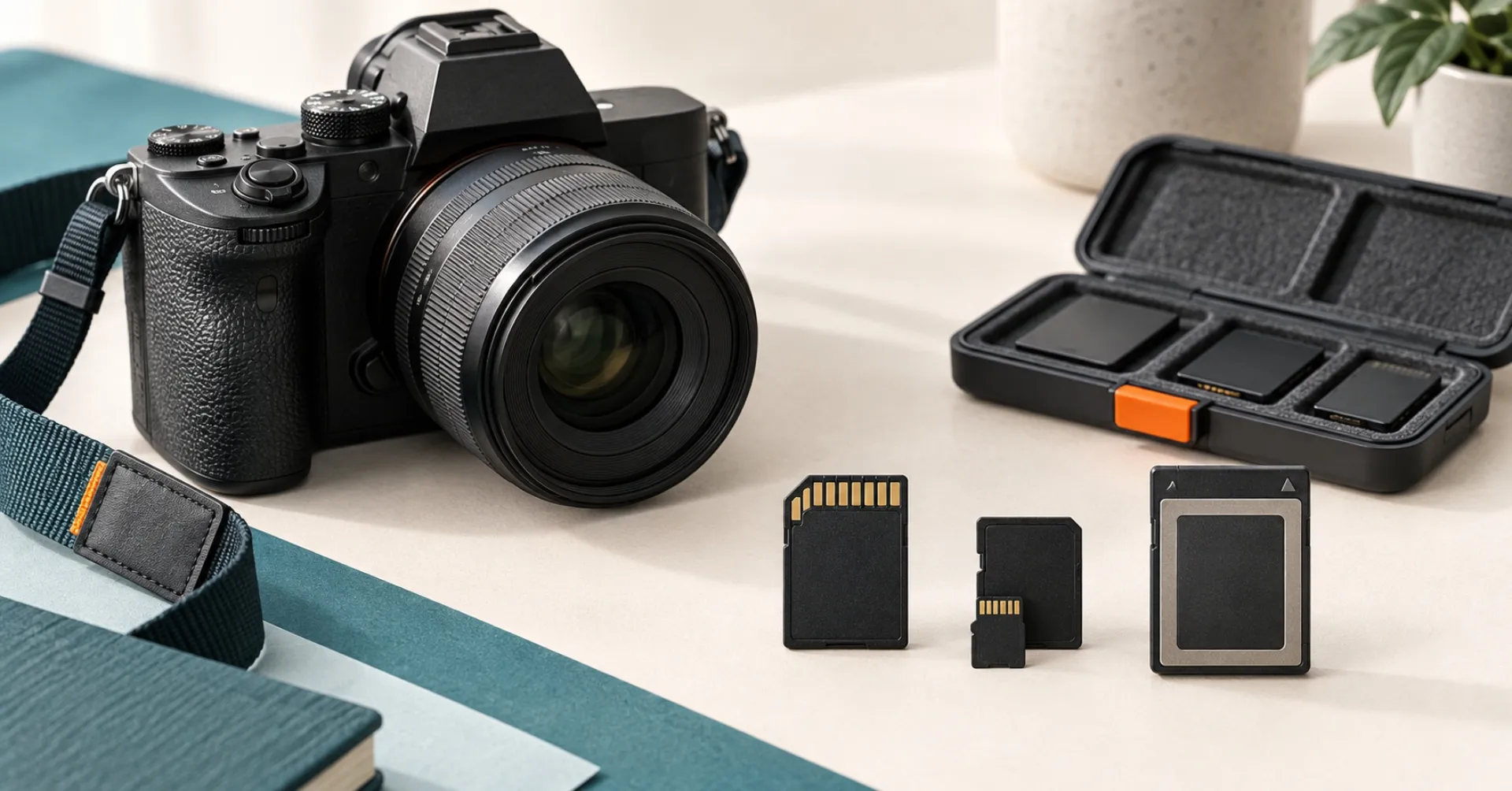
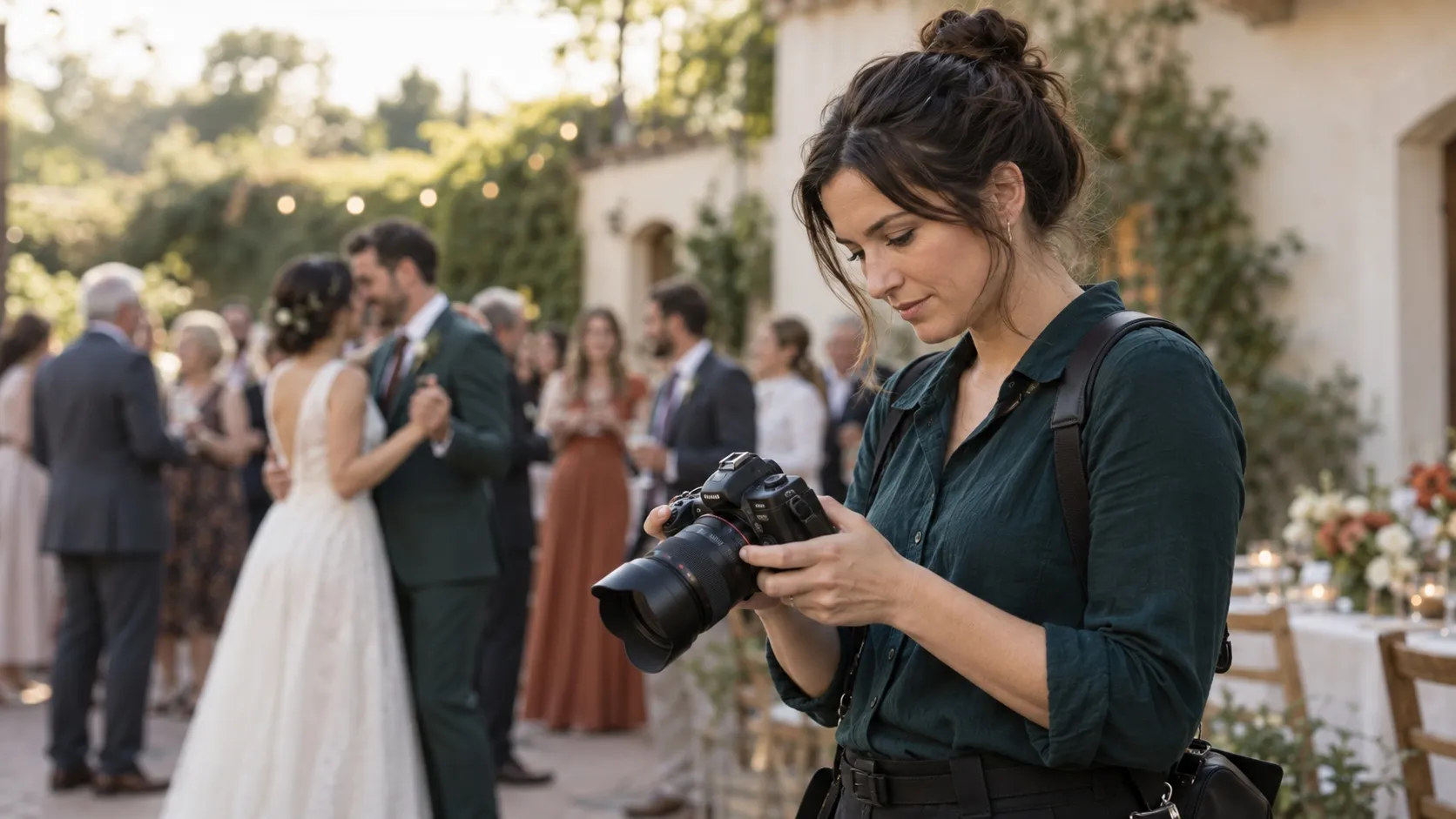
As a wedding photographer, what I care about most in a wedding camera is reliability.
Weddings are one of the least forgiving things you can shoot.
Light changes fast, timelines tighten, and the moments that matter only happen once.
→ Jump to: Short answer: The best cameras for wedding photography in 2026
→ Jump to: The best wedding cameras by brand
→ Jump to: The best Nikon camera for wedding photography
When I think about the best camera for wedding photography, I don’t start with specs. I start with whether I can trust the camera to do its job all day.
That’s also why there is no single best wedding camera for everyone.
The right choice depends on how you shoot, whether video matters to you, the lens system you want to build around, and how much margin for error you want when conditions get messy.
Respuesta rápida: If you want a safe, proven wedding camera, start with a modern mirrorless body that gives you strong autofocus, good low-light performance, and dual card slots. (I like the Nikon Z6 III.) From there, the best option depends on your workflow and your system.
Related Wedding Photography Gear Guides
Choosing a camera is usually the biggest gear decision you’ll make. These guides will help you compare camera systems and build the rest of your setup with the same focus on reliability and real-world wedding performance.
| If you’re deciding… | Empieza aquí |
|---|---|
| What belongs in a complete wedding kit | Wedding Photography Gear |
| Whether to choose DSLR or mirrorless | DSLR vs. Mirrorless |
| Which lenses to pair with your camera | Best Lenses for Wedding Photography |
| Which flash works best at weddings | Best Flash for Wedding Photography |
| How to simplify your entire kit | Equipo fotográfico minimalista para bodas |
Short Answer: The Best Cameras for Wedding Photography in 2026
If you want the fastest path to a decision, start here.
The Nikon recommendations below come directly from my experience as a professional wedding photographer.
The Panasonic and Canon recommendations come from advice I’ve gotten from other wedding photographers combined with my own research.
| Categoría | Camera | Why It’s Here | CTA |
|---|---|---|---|
| Best Overall | Nikon Z6 III | Balanced performance, dependable autofocus, strong low-light results, and a proven fit for full wedding days | Ver opciones |
| Best Value | Nikon Z6 II | Wedding-capable full-frame performance at a lower price without major compromises | Ver opciones |
| Best for Hybrid Photo + Video | Panasonic Lumix S1II | A strong choice if video matters almost as much as stills | Ver opciones |
| Best for Canon Shooters | Canon EOS R6 Mark II | A dependable body backed by a strong ecosystem and a clean long-term upgrade path | Ver opciones |
The goal here is to help you quickly make a decision based on how you actually shoot.
If you’re not sure which direction to go yet, here’s a simple way to think about it:

The Best Wedding Cameras by Brand
Nota: I’ve shot weddings for almost 15 years, and Nikon has been my main workhorse system for most of that time.
I first ended up with Nikon almost by accident, but it became the system I know best. So while I definitely have my preferences, I don’t think the decision should come down to brand loyalty alone.
The Nikon recommendations come from my own wedding work. The Canon, Sony, and Fujifilm recommendations below are research-based alternatives for photographers building around those systems.
Most photographers don’t really choose a camera body in isolation.
They choose a system, then pick the body that makes the most sense inside it.
So if you already know you prefer a certain ecosystem, the decision usually gets simpler.
Here’s my short list of the best cameras for wedding photography by brand.
Best Nikon Camera for Wedding Photography: Nikon Z6 III

The Nikon Z6 III is my go-to wedding camera right now.
What I like about it is the balance. It gives you strong autofocus, reliable low-light performance, solid video, and a file size that still feels practical for real wedding work.
To me, it’s the Nikon body that best balances performance and usability without drifting into overkill.
- Resolución. 24.5MP partially stacked CMOS sensor
- Card slots. One CFexpress Type B/XQD slot and one UHS-II SD slot
- Estabilización. Estabilización de imagen en el cuerpo de hasta 8 pasos
- Calidad de vídeo. Grabación 4K sobremuestreada a partir de 6K
- Autoenfoque. Subject-detection autofocus optimized for moving subjects
If you know you want a Nikon camera for wedding photography but aren’t sure which body to choose, these are the three options I would compare:
| Camera | Lo mejor para | Why Choose It | Main Tradeoff |
|---|---|---|---|
| Nikon Z6 III | Best overall | The best balance of autofocus, low-light performance, practical file sizes, and video capabilities for most Nikon wedding photographers | Costs more than the Z6 II and uses two different card formats |
| Nikon Z6 II | Best value | A proven dual-slot full-frame body that still covers the core needs of professional wedding photography | Its autofocus, sensor readout, and video tools are a generation behind the Z6 III |
| Nikon Z8 | Best premium option | A 45.7MP stacked-sensor body for photographers who genuinely need more resolution, speed, and higher-end video capabilities | Higher cost and much larger files than many wedding photographers need |
For most Nikon wedding photographers, I would start with the Z6 III.
Go with the Nikon Z6 II if keeping the body cost down matters more than having Nikon’s newer autofocus, sensor, and video technology. Move up to the Nikon Z8 if you have a real reason to want 45.7MP files or its additional performance—not simply because it sits higher in the lineup.
Consulta el precio y la disponibilidad de la Nikon Z6 III.
Best Canon Camera for Wedding Photography: Canon EOS R6 Mark II

The Canon EOS R6 Mark II has a strong blend of features for weddings.
It’s fast, dependable, and well-rounded, which is exactly what most wedding photographers need.
Its 24.2MP files remain practical for high-volume wedding work, and its two UHS-II SD card slots support an immediate backup workflow.
- Sensor. 24.2MP full-frame CMOS
- Card slots. Two UHS-II SD card slots
- Velocidad de ráfaga. Up to 40 fps with the electronic shutter
- Autoenfoque. Dual Pixel CMOS AF II with subject recognition
- ISO range. 100–102,400 expandable to to 204,800
Consulta el precio y la disponibilidad de la Canon EOS R6 Mark II.
Best Sony Camera for Wedding Photography: Sony A7 V

The Sony A7 V is one of the strongest all-around wedding cameras on this list.
Sony built a lot of trust in the wedding world through its high-quality autofocus, and that’s still a big part of the appeal here.
The A7 V also works well for photographers who want one body that can comfortably handle both stills and video.
- Resolución. 33MP partially stacked full-frame CMOS sensor
- Autoenfoque. AI-based subject recognition and real-time tracking
- Continuous shooting. Blackout-free shooting at up to 30 fps
- Calidad de vídeo. Full-frame 4K at up to 60 fps, oversampled from 7K
- Estabilización de imagen. 5-axis in-body stabilization
Check pricing and availability for the Sony A7 V.
Best Fujifilm Camera for Wedding Photography: Fujifilm X-T5

The Fujifilm X-T5 is a good fit for photographers who value the Fujifilm shooting experience and color science.
I wouldn’t treat it as the safest default recommendation for every wedding photographer. But it’s a solid option for photographers who already know they like the Fuji approach and are comfortable building a wedding workflow around APS-C.
- Resolución. 40.2MP APS-C sensor
- Card slots. Two UHS-II SD card slots
- Estabilización. Up to 7 stops of in-body image stabilization
- Duración de la batería. Up to 740 shots per charge in Economy mode
- Vídeo. 6.2K at 30 fps with 4:2:2 10-bit color

How to Choose the Right Wedding Camera for the Way You Shoot
The biggest mistake photographers make here is trying to find the best camera in the abstract.
Wedding cameras only make sense inside real working conditions: your pace, your style, your budget, your lens plans, and how much risk you are willing to tolerate on a paid job.
In my experience, this decision gets a lot easier once you stop asking which camera has the best specs and start asking what your day actually looks like when you’re shooting.
If you want the fastest path, use this quick-scan chart:
| Si esto te suena... | Empieza aquí | Por qué |
|---|---|---|
| You’re just starting weddings | Nikon Z6 II | A strong value pick with full-frame performance and a lower price than the top-tier options |
| You’re already booking weddings regularly | Nikon Z6 III | The best balance of autofocus, low-light performance, and real wedding-day usability |
| Photo and video both matter | Panasonic Lumix S1II | The strongest fit here for hybrid shooters who need stills and video in one body |
| You care most about reliability and long-term system growth | Canon EOS R6 Mark II o Nikon Z6 III | Both are dependable, wedding-capable bodies with strong autofocus and systems you can build around |
That chart is the short version.
Here’s more information to help you think about finding the right camera for how you shoot:
If You’re Just Starting Weddings
At this stage, reliability matters more than perfection.
You don’t need the most advanced camera on the market. You need something that can get you through a full wedding day without making everything harder than it needs to be.
That usually means autofocus you can trust, decent low-light performance, and a system you can afford to build around.
I’d rather see a newer photographer buy into a sensible system than overspend on a body and then get stuck with weak lens options.
If that sounds like you, I’d start with the Nikon Z6 II. It’s the value pick on this list, and it makes a lot more sense for newer wedding photographers than jumping straight to the most expensive option.
If You’re Already Booking Weddings Regularly
Once you are shooting weddings consistently, the question changes.
Now it is less about whether the camera can do the job at all and more about whether it can do it cleanly under pressure.
That’s where autofocus reliability, battery life, dual card slots, and a predictable two-body workflow start to matter a lot more.
If that sounds like you, I’d start with the Nikon Z6 III. It’s the best overall choice here for photographers who need a camera that can keep up with real wedding work, not just look good on a spec sheet.
If Video Matters Almost as Much as Stills
Hybrid shooting changes the decision.
If you regularly offer both photo and video, you need a body that can handle both without making either side feel compromised. That usually means stronger video tools, stronger thermal performance, and a system that supports that kind of work well.
If video is only occasional, though, I would still prioritize stills performance first.
Most wedding photographers are still delivering photographs first and video second.
If hybrid work is a real part of your business, the research-based option I’d start with is the Panasonic Lumix S1II. That’s the clearest fit in this lineup for photographers who genuinely need one body to cover both.
The camera decision is only one part of that workflow. If you’re also deciding whether one person should cover both formats or whether the couple is better served by separate professionals, see our guide to fotógrafos y videógrafos de boda.
If Reliability Matters More Than Specs on Paper
This is where most experienced wedding photographers land.
You stop chasing marginal improvements and start caring more about whether the camera gets out of your way. On a wedding day, that matters more than having the most exciting spec sheet.
If that sounds like you, I’d start with the Nikon Z6 III or the Canon EOS R6 Mark II. And if you already know which system you want to build around, return to the brand section above and choose inside that ecosystem.
6 Things that Actually Matter in a Wedding Photography Camera
Specs are easy to compare. What’s harder is knowing which ones actually matter for weddings.
Because weddings are not controlled environments. People move fast. Indoor light gets ugly. Receptions get dark. Timelines get compressed. And none of that cares what the marketing page said.
These are the six things I would prioritize:
1. Dual Card Slots
If you are shooting weddings professionally, this is one of the few true non-negotiables.
Dual card slots let you record images to two cards at once, which gives you immediate redundancy. Card failures are rare, but weddings are not the kind of job where rare is good enough.
2. Fast and Accurate Autofocus
Wedding days are full of moments that only happen once.
A strong autofocus system helps with aisle movement, first kisses, reactions during speeches, and all the candid moments in between. Good autofocus does not just make shooting easier. It saves images.
3. Low-Light Performance
Many of the most important parts of a wedding happen in terrible light.
Indoor ceremonies, receptions, candlelit rooms, mixed DJ lighting—this is where a weaker camera starts to show its limits. A camera with strong low-light performance gives you cleaner files, more flexibility, and less work in post.
4. Full-Frame vs APS-C
I do think full-frame is a real advantage for weddings.
You do not absolutely need it, and APS-C can still work, especially when you are starting out. But full-frame gives you more margin for error in low light and a little more flexibility overall. For paid wedding work, that margin matters.
5. Battery Life, Handling, and System Reliability
The longer you shoot weddings, the more you notice the practical stuff.
How often you swap batteries. How quickly you can change settings. How natural the controls feel. How dependable the camera is after eight or ten hours of use. This is also why I think body choice should never be separated from system choice.
6. Electronic Shutter, Sensor Readout, and Flicker
Silent shooting can be incredibly useful during ceremonies. But an electronic shutter is not automatically the safest choice in every situation.
Here are the features and problems to watch out for:
- Rolling shutter: A slower sensor readout can distort people or objects moving quickly.
- Banding: LED lights, DJ lighting, and electronic displays can create dark stripes or uneven color and exposure.
- Pre-capture: Some newer cameras begin buffering images before you fully press the shutter, giving you extra insurance for difficult-to-time moments.
Stacked and partially stacked sensors generally read out faster, which can make electronic-shutter shooting more dependable. Anti-flicker and high-frequency flicker-reduction settings can also help, but they do not eliminate every problem under artificial light.
Before using these features on a paid wedding, test how your camera behaves under LED and reception lighting and learn when to switch back to the mechanical shutter. The important thing is not simply having a silent mode. It is knowing when that mode can be trusted.
A Note on Choosing Between Mirrorless and DSLR
A few years ago, this was a real decision.
Now, for most photographers buying today, mirrorless is the default.
That’s not because DSLRs are bad. It’s because mirrorless systems have pulled ahead in the areas that matter most for weddings—especially autofocus and long-term system support.
DSLRs can still absolutely shoot weddings. But if you’re starting fresh or planning for the next few years, most photographers are better off building around a mirrorless system.
For a deeper breakdown, check out our DSLR vs. mirrorless guide.
Preguntas frecuentes sobre cámaras para bodas
Here are answers to some of the questions I see come up a lot around finding a good camera for wedding photography.¿Cuál es la mejor cámara para fotografiar bodas?
The best camera for wedding photography is usually a modern mirrorless body with strong autofocus, dependable low-light performance, and dual card slots. I recommend the Nikon Z6 III, but there are several other options out there that fit these criteria. From there, the best choice depends on your budget, system preference, and whether you also shoot video.What camera do wedding photographers use?
Most wedding photographers use mid-range to high-end mirrorless cameras from Canon, Sony, Nikon, Fujifilm, or Panasonic. The body varies, but the priorities are usually the same: reliability, autofocus, low-light performance, and a strong lens ecosystem.¿Necesito una cámara de fotograma completo para fotografiar bodas?
No, but I do think full-frame makes wedding work easier. I’ve tried moving to smaller sensor formats myself, and for me the tradeoff was less flexibility in difficult light and less margin for error in the files. APS-C can still work, but if you want the safer all-around option for weddings, I would lean full-frame.¿Qué resolución necesito para fotografiar bodas?
For most wedding photographers, something in the 24–33MP range is a very comfortable sweet spot. That’s enough resolution for large prints and cropping flexibility without pushing file sizes into a place that creates unnecessary storage and editing friction. Note: Higher-resolution cameras produce larger files, which directly affects how many photos you can store. Use our photo storage calculator to estimate your storage.¿Son las cámaras sin espejo mejores que las DSLR para fotografiar bodas?
For most photographers buying today, yes. Mirrorless systems now offer better autofocus, better real-time feedback, and stronger long-term support. DSLRs can still work well, but they are no longer the default recommendation for most new buyers.What is the best DSLR for wedding photography?
If you specifically want a DSLR, the Nikon D780 is one of the stronger research-based options to consider. It gives you a full-frame sensor, dual card slots, and access to Nikon’s extensive F-mount lens system. I would mainly consider it if you already own compatible Nikon lenses, prefer an optical viewfinder, or find a compelling used price. If you are starting a system from scratch, I would still choose mirrorless for the autofocus improvements and clearer long-term upgrade path.¿Cuál es la mejor cámara fotográfica para principiantes?
The best beginner wedding photography camera is usually not the cheapest camera. It’s the most affordable body that still gives you dependable autofocus, decent low-light performance, dual card slots, and a system you can actually grow into. If you want a specific beginner-friendly option from this list, I’d start with the Nikon Z6 II. It delivers wedding-capable full-frame performance at a lower price than the newest professional options without giving up card redundancy.What is the best camera for wedding photography and videography?
If you regularly shoot both, the best option is usually a hybrid-friendly mirrorless camera that handles strong stills and dependable video without making either side feel compromised. The research-based options I would start with are the Panasonic Lumix S1II y Sony A7 V.

 English