

Aperture priority mode lets you choose the aperture while the camera automatically adjusts shutter speed to maintain a proper exposure.
The combination of control and automation makes it one of the fastest and most practical shooting modes.
→ Jump to: When To Use Aperture Priority
→ Jump to: When Aperture Priority Is The Wrong Choice
It’s especially useful when depth of field is the main creative decision you’re making—whether that’s blurring a background for a portrait or keeping more of a landscape in focus.
But aperture priority doesn’t just affect depth of field.
Every aperture choice also affects the shutter speed the camera chooses, and that’s where many of the mode’s strengths—and limitations—come from.
Below, I’ll explain how aperture priority works, when it makes shooting easier, and when another mode is the better choice.
Keep Building Your Camera Settings Skills
Aperture priority is one way to divide exposure control between you and the camera. These guides will help you understand how exposure settings work together, compare aperture priority with shutter priority, and decide when full manual control makes more sense.
| If you want to… | Start here |
|---|---|
| Understand how exposure settings work together | Exposure Triangle |
| Prioritize shutter speed instead of aperture | Shutter Priority Mode |
| Take full control of your exposure settings | How to Shoot in Manual Mode |
What Is Aperture Priority?
In aperture priority, you choose the aperture, and the camera chooses the shutter speed.
That’s the whole idea. But it’s easy to misunderstand what this actually means in practice.
You’re not giving control to the camera.
Instead, you’re choosing which part of the exposure matters most for the shot, and letting the camera handle the rest.
In this case, what you’re prioritizing is depth of field.
That’s why aperture priority isn’t really about “auto vs. manual.” It’s about deciding what you care about most in the moment.
If depth of field is the main decision, aperture priority is usually the right tool.
If something else matters more, it probably isn’t.
[If you want to understand how this fits into the bigger picture of exposure, start with our shutter speed guide.]

What You Control vs. What The Camera Controls
In aperture priority, the split is simple:
- You control: aperture (f-stop)
- The camera controls: shutter speed
When you change your aperture, the camera automatically adjusts the shutter speed to keep the exposure balanced.
So if you open up your aperture (say from f/4 to f/2), the camera will usually increase shutter speed to compensate.
If you stop down (say from f/4 to f/8), the camera will slow the shutter speed.
That relationship is what makes the mode powerful. And it’s also where things can go wrong if you’re not paying attention.
What Aperture Priority Is Actually For
Aperture priority is designed for situations where depth of field is the creative decision that matters most.
That usually means one of two things:
- You want a shallow depth of field (blurred background, subject separation)
- You want a deep depth of field (more of the scene in focus)
Instead of constantly adjusting both aperture and shutter speed manually, you lock in the look you want—and let the camera keep up with changing light.
In real shooting, this is what makes aperture priority feel fast and usable.
You’re making one meaningful decision instead of juggling two.
What Aperture Priority Doesn’t Do For You
This is where most confusion comes from.
Aperture priority does not protect you from bad shutter speeds.
It also doesn’t “know” whether your subject is moving, or whether the scene is about to get chaotic.
It’s just reacting to light.
That means you can still end up with:
- motion blur if the shutter drops too low
- camera shake in low light
- inconsistent results if the scene changes quickly
In my experience, this is where photographers get tripped up.
They trust the mode instead of watching what it’s doing.
Aperture priority works well when you stay aware of the shutter speed it’s giving you, not just the aperture you picked.
What Aperture Priority Changes In Your Photos
Aperture priority isn’t just a camera setting. It’s a decision about how your photos will look.
When you choose the aperture, you’re shaping the image in two ways at the same time: what’s in focus, and how the camera handles motion.
And of course, these two things are tied together in photography whether you think about them or not.

Depth Of Field And Background Blur
The most obvious effect is depth of field.
A wider aperture (like f/1.8 or f/2.8) gives you a shallow depth of field. Your subject stays sharp, and the background falls out of focus.
A narrower aperture (like f/8 or f/11) brings more of the scene into focus.
That’s the creative side of aperture priority, and the reason most photographers like using it.
If you care about how much of the image is sharp, this is the fastest way to control it.
The Indirect Effect On Shutter Speed
The less obvious effect is what happens to your shutter speed.
Every time you change aperture, the camera compensates with shutter speed to keep the exposure balanced.
That means:
- Opening the aperture usually increases shutter speed
- Stopping down usually decreases shutter speed
This is where aperture priority becomes a little complicated.
Because even though you’re thinking about depth of field, the camera is quietly making decisions about motion.
And those decisions can either help you or hurt you, depending on the situation.
Why This Matters More Than The Mode Itself
Most confusion around aperture priority comes from focusing on the mode instead of the tradeoff.
The real tradeoff is:
depth of field vs. shutter speed flexibility
If you open up your aperture for a portrait, the camera will typically compensate with a faster shutter speed.
If you stop down for a group photo, you may be forcing the camera into a slower shutter speed that risks blur.
Once you realize you’re not just picking a setting but actually predicting what the camera will do next, the mode becomes a lot easier to use.
And that’s what turns aperture priority from a guess into a tool.
When To Use Aperture Priority
Aperture priority works best when depth of field is the decision that matters most, and everything else can adjust around it.
If you can answer, “I care most about how much of the image is in focus,” aperture priority is probably the right choice.
Portraits And Subject Separation
Portraits are the most natural fit for aperture priority.
With portraits, you’re trying to control background blur and keep attention on the subject.
So you pick your aperture based on the look you want—maybe f/1.8 for strong separation or f/2.8 for a little more margin—and let the camera handle the shutter speed.
In real shooting, this keeps things moving.
You don’t have to constantly rebalance exposure as light changes. You just adjust aperture when you want a different look.
Groups And Scenes Where More Needs To Be In Focus
The same logic applies in the opposite direction.
If you’re shooting a group or a scene where multiple people need to be sharp, depth of field becomes the priority again, just in a different way.
So instead of worrying about shutter speed first, you stop down your aperture (f/5.6, f/8, etc.) to get enough of the scene in focus.
The camera then adjusts the shutter speed to match.
This is one of the easiest ways to stay consistent during family photos or group setups, especially when you’re working quickly.
Real-World Shooting Where Light Changes But Your Goal Doesn’t
This is where aperture priority becomes especially useful.
In situations like walking around, shooting candids, or moving between indoor and outdoor light, your depth-of-field goal usually stays the same, but your light doesn’t.
Instead of constantly adjusting both aperture and shutter speed manually, you lock in the aperture and let the camera adapt.
In my experience, this is where the mode is really useful, because it lets you stay focused on moments instead of exposure math.
As long as you’re keeping an eye on your shutter speed, aperture priority mode is one of the fastest ways to shoot consistently in changing conditions.
When Aperture Priority Is The Wrong Choice
Aperture priority breaks down when depth of field is no longer the most important variable.
If something else matters more—especially motion—it stops being the right tool.
This is also where a lot of frustration with the mode comes from—not because it’s flawed, but because it’s being used for the wrong job.
Fast Action Where Shutter Speed Matters More
If your subject is moving quickly, shutter speed becomes the priority.
That includes:
- sports
- kids running around
- dance floor moments
- anything unpredictable and fast
In these situations, letting the camera choose your shutter speed is risky.
It may drop lower than you expect, especially if the light changes or your aperture is stopped down.
This is where shutter priority mode usually makes more sense.
You control motion directly, and let the camera handle exposure around that.
Low Light Where The Shutter Can Fall Too Far
Low light is one of the most common failure points for aperture priority.
As the light drops, the camera compensates by slowing the shutter speed.
And it will keep slowing it, even past the point where you can safely handhold or freeze motion.
That’s how you end up with images that look sharp in the viewfinder but come out blurry.

This is especially noticeable in reception environments, where light is inconsistent and movement is constant.
If you’re not actively watching your shutter speed, it’s easy to drift into unusable territory.
Scenes That Confuse The Meter
Keep in mind, aperture priority relies on the camera’s meter to decide exposure.
And meters are easy to fool.
Situations like:
- bright backlighting
- dark clothing against light backgrounds
- high-contrast scenes
can push the camera toward exposures that don’t match what you actually want.
In these cases, you either need to:
- use exposure compensation
- or switch to manual for consistency
In my experience, this is less about the mode itself and more about paying attention.
Aperture priority works well when you understand what it’s reacting to—and when you step in to course correct when the mode gets it wrong.
How To Use Aperture Priority Without Ruining Shots
Aperture priority gets easier once you stop thinking of it as a mode you “turn on” and start thinking of it as a simple decision process.
The process is: choose the look you want, check what shutter speed the camera gives you, then step in if that tradeoff no longer works.
That’s what keeps the mode useful instead of risky.
Start With The Visual Goal
The first question isn’t, “What settings should I use?”
It’s, “How much of this image do I want in focus?”
If you’re shooting a portrait and want background blur, that points you toward a wider aperture.
If you’re shooting a group or a scene where multiple people need to be sharp, that points you toward a narrower aperture.
This matters because aperture priority works best when your aperture choice is deliberate.
If you pick f-stops randomly, the rest of the mode feels random too.
Watch The Shutter Speed, Not Just The Aperture
I recommend this habit: once you choose the aperture, immediately look at the shutter speed the camera is giving you.
That number tells you whether the tradeoff is actually usable.
A nice depth of field decision can still produce a bad photo if the shutter speed drops too low for the scene.
If the shutter speed looks too slow, you have to change something.
Usually that means:
- raise ISO
- open the aperture more
- add light
- or switch modes if motion control is the real priority
Use ISO And Exposure Compensation On Purpose
Aperture priority works best when you treat ISO and exposure compensation as part of the workflow, not as afterthoughts.
ISO helps you protect shutter speed.
If the camera is giving you a shutter speed that’s too slow, raising ISO is often the cleanest fix.
Exposure compensation helps when the meter is technically “correct” but visually wrong.
That comes up all the time in bright backlight, dark clothing, or high-contrast scenes. The camera may be reacting normally, but the result still won’t match what you want.
In my experience, this is the difference between using aperture priority casually and using it well.
You’re not just accepting what the camera gives you. You’re steering it.
A Simple Field Workflow
Here’s a repeatable workflow for using aperture priority mode:
- Decide what you want in focus.
- Set the aperture for that look.
- Check the shutter speed the camera gives you.
- If the shutter is too slow, raise ISO or change your aperture.
- If the meter is being fooled, use exposure compensation.
- If motion becomes the real problem, stop forcing aperture priority and switch modes.
That last step matters.
Aperture priority is useful because it simplifies one kind of decision.
But it’s not useful when you keep asking it to solve a different problem than the one it was built for.
Aperture Priority vs. Shutter Priority vs. Manual
A lot of photographers get stuck on this question because they think the modes are ranked.
As if manual is the “real” mode, aperture priority is a halfway step, and shutter priority is something you eventually outgrow.
That framing makes the whole topic harder than it needs to be.
The better question is: Which variable matters most right now?
| Mode | You Control | Best When | Main Risk |
|---|---|---|---|
| Aperture Priority | Aperture | Depth of field is the main decision | The camera may choose a bad shutter speed |
| Shutter Priority | Shutter speed | Motion control is the main decision | The camera may push aperture to a limit you don’t want |
| Manual | Aperture and shutter speed | You need consistency or full control | It takes more active management when light changes |
Use Aperture Priority When Depth Of Field Is The Main Decision
This is the right choice when you care most about how the image looks in terms of focus depth.
Portraits are the obvious example.
You decide how blurred or how deep you want the image to be, and let the camera adjust shutter speed around that choice.
It also works well when light is changing but your visual goal is staying pretty consistent.
Use Shutter Priority When Motion Is The Main Decision
If motion is the thing you can’t afford to get wrong, shutter priority is usually the better choice.
That includes fast action, unpredictable movement, and situations where blur would ruin the frame.

In these cases, it makes more sense to lock in the shutter speed you need and let the camera work around that.
This is why aperture priority and shutter priority are close neighbors, but not substitutes.
Use Manual When You Need Consistency Or Full Control
Manual makes the most sense when you want stable, repeatable exposure and you don’t want the camera changing either variable behind the scenes.
That often matters in controlled light, studio conditions, flash work, or scenes where the meter keeps getting fooled.
Manual is not automatically better.
It’s just the best fit when consistency matters more than speed or convenience.
In my experience, photographers do better when they stop treating these modes like identity choices.
They’re just tools.
Pick the one that protects the variable you can’t afford to give up.
Aperture Priority FAQ
Here are answers to some of the questions I see come up a lot around aperture priority mode and when—and how—to use it.
What is aperture priority mode?
Aperture priority mode is a camera mode where you choose the aperture and the camera chooses the shutter speed. You use it when depth of field is the main creative decision.
Is aperture priority good for beginners?
Yes. It’s one of the best modes for learning how aperture affects your photos without having to manage every exposure setting manually. But it only works if you also pay attention to the shutter speed the camera is choosing.
Is aperture priority the same as Av mode?
Yes. On many cameras, especially Canon bodies, aperture priority is labeled Av. Other cameras may label it A. The function is the same.
Is aperture priority better than manual mode?
Not inherently. Aperture priority is better when depth of field is the main decision and light is changing. Manual is better when you need consistency or full control.
Why are my photos blurry in aperture priority?
Usually because the camera chose a shutter speed that was too slow for the scene. That happens most often in low light or when your subject is moving. Aperture priority does not protect you from motion blur or camera shake by itself.
Should I use aperture priority for portraits?
Often, yes. Portraits are one of the clearest use cases because you’re usually deciding how much background blur you want. That makes aperture the priority.
Should I use aperture priority for sports or fast action?
Probably not. In those situations, shutter speed matters more than depth of field. Shutter priority or manual is usually the better fit.
Does aperture priority work for wedding photography?
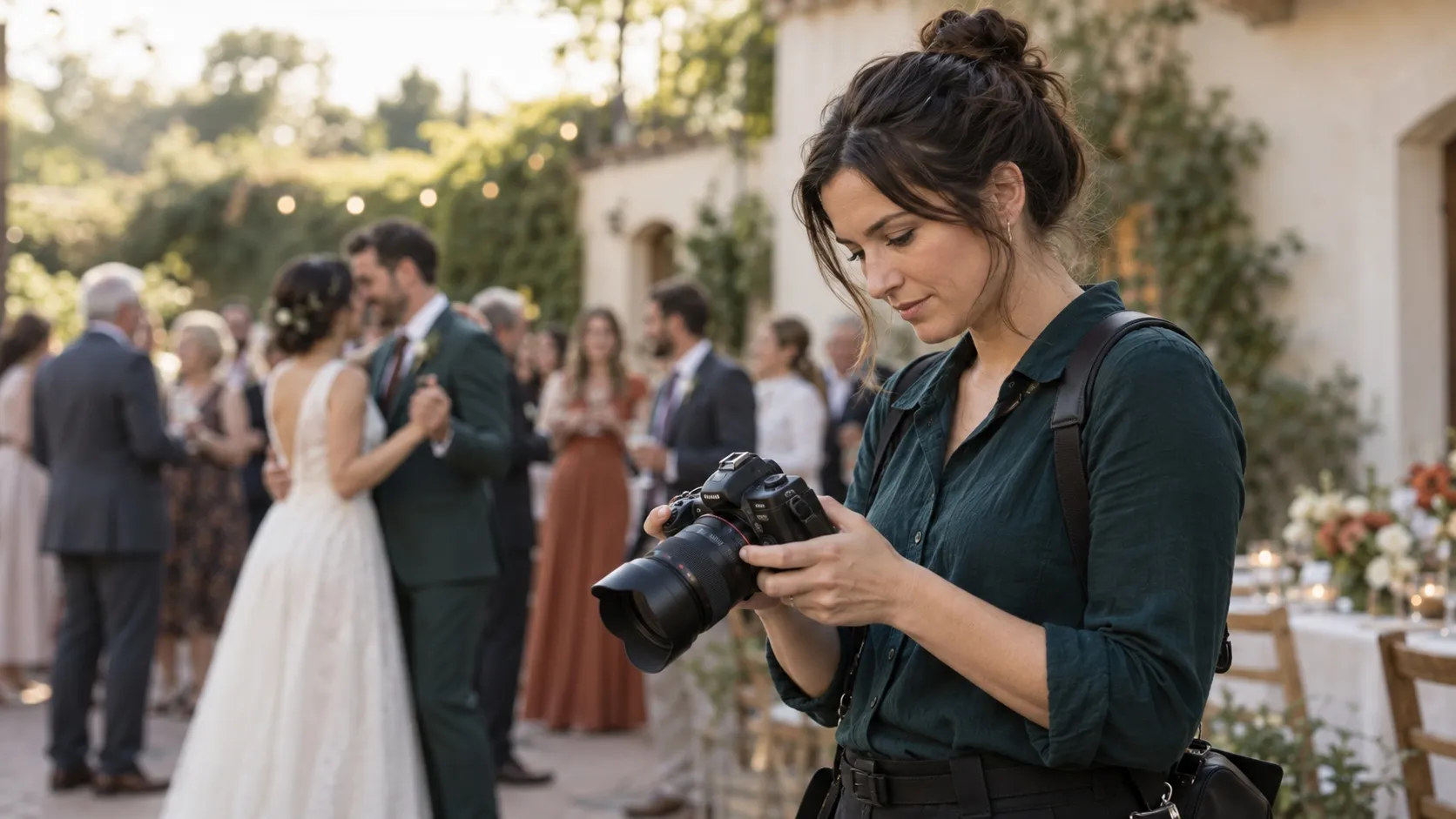
It can, especially for portraits, prep, candids, and other parts of the day where your depth-of-field goal stays fairly consistent while the light changes. It’s less reliable when motion becomes the bigger problem, like a dark, fast-moving dance floor.
Ready to move beyond depth of field decisions?
Aperture Priority is often the most practical shooting mode because it lets you focus on depth of field while the camera handles exposure.
But eventually most photographers discover that movement, blur, and changing conditions can become more important than aperture itself—and that’s where the rest of the exposure system starts to matter.
| If you’re trying to understand… | Start here |
|---|---|
| How shutter speed affects motion, sharpness, and blur | Shutter Speed |
| When freezing action becomes more important than depth of field | Fast Shutter Speed |
| When slower shutter speeds create atmosphere, movement, and energy | Slow Shutter Speed |
| How photographers intentionally use blur instead of avoiding it completely | Motion Blur Photography |
| When shutter speed should become your primary creative control | Shutter Priority Mode |
| When automatic modes stop being enough and manual control becomes useful | How To Shoot In Manual Mode |
| How aperture, shutter speed, and ISO work together as a complete exposure system | Exposure Triangle |


 Español