

Photography by Daniel Lopez Perez


Adventure wedding photography is one of the most confusing labels in the wedding world.
Some people use it like a style (as if it automatically tells you what the photos will look like).
Others use it as shorthand for hiking, mountains, and epic scenery.
In practice, I’ve found that adventure wedding photography usually describes the setting and the experience—not the photographic approach.
The adventure part shapes the constraints. The style still determines the images.
That’s what this page is for: helping photographers understand what the label actually means, decide whether it fits how you like to work, and describe it to clients without overpromising.
(If you’re a couple who landed here: “adventure” usually means your adventure wedding is built around a location or experience—but your photos can still be documentary, candid, editorial, artistic, or a blend.)
→ Jump to: What “Adventure Wedding” Usually Means To Photographers
→ Jump to: How To Tell If Adventure Wedding Photography Fits The Way You Shoot
Related Wedding Photography Styles
Not sure where adventure fits? Start with our guide to Wedding Photography Styles, then explore the styles photographers most often compare with adventure coverage.
| If you’re comparing… | Start here |
|---|---|
| Adventure vs. Lifestyle Wedding Photography | Lifestyle Wedding Photography |
| Adventure vs. Documentary Wedding Photography | Documentary Wedding Photography |
| Adventure vs. Artistic Wedding Photography | Artistic Wedding Photography |
What Is Adventure Wedding Photography?
Adventure wedding photography is context-first.
It prioritizes environment, movement, and experience—often in non-traditional locations, with more travel, more variables, and less control than a standard wedding day.
The key point is this: adventure describes where and how the wedding happens. The photographic style still determines how the images are made.
That’s why two photographers can shoot the same adventure wedding and deliver completely different-looking galleries.
Here’s the simplest way to define it:
- Adventure wedding photography is: wedding coverage built around a location or experience, where the environment and constraints shape the timeline, the plan, and what’s possible.
- Adventure wedding photography is not: a single visual look, a preset, or a guarantee of “epic” images no matter the conditions.
In practice, it often overlaps with elopements and destination coverage, because once travel and public locations enter the plan, constraints go up fast.
What Adventure Wedding Photos Typically Look Like
Most strong adventure galleries feel experience-driven.
They read like a sequence of movement and environment, not a set of portraits that could have been made anywhere.
But “adventure” doesn’t lock you into one look.
The underlying style still determines whether the images feel documentary, candid, editorial, artistic, or a blend.
A lot of adventure coverage ends up documentary or candid at its core. Not because it has to, but because the day is moving, the light changes fast, and you’re usually working in real environments, not controlled sets.

Most adventure wedding photography that actually works is built on three things:
- Planning that protects the day: access, backups, and a realistic route so the wedding part doesn’t get eaten by logistics.
- Pacing over perfection: you’re building a sequence, not hunting one hero frame at the expense of everything else.
- Adaptability without chaos: you adjust to weather, crowds, and time loss without turning it into a frantic scramble.
Common Visual Traits Of Adventure Wedding Photos
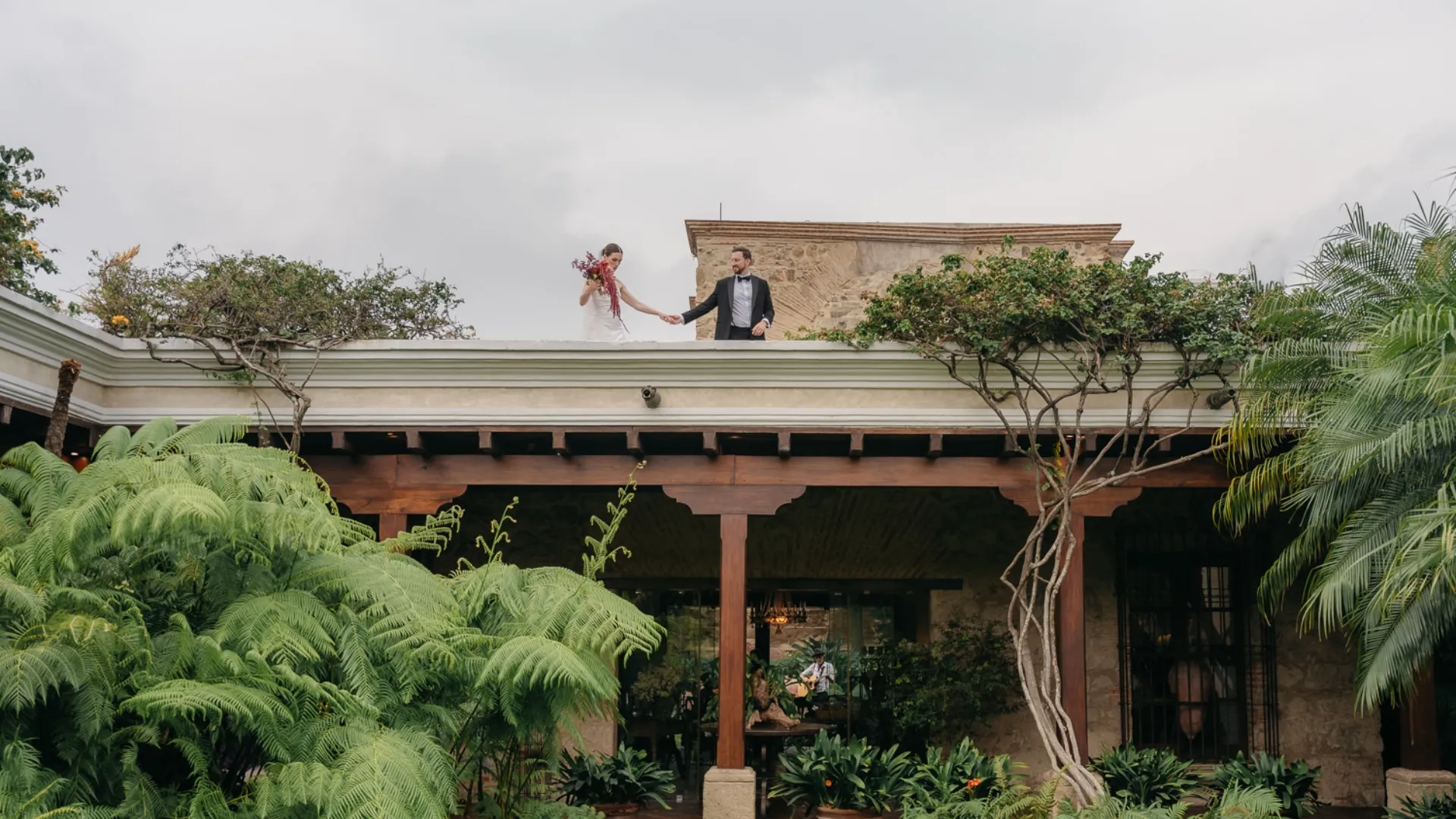
- Environment-forward frames: wide photos where the landscape is a main subject, not just a background.
- Scale and context: the couple is often smaller in the scene to show where they are.
- Movement and progression: walking, climbing, traveling, getting from one place to another.
- Weather and realism: wind, rain, fog, harsh sun, cold—conditions are part of the story.
- A mix of wide and intimate moments: big scenery images still land best when you also capture connection up close.

You Don’t Need New Locations To Make Adventure Work
A common misconception is that adventure coverage only “counts” if you’re constantly chasing a new epic spot.
In reality, returning to a few strong locations can make your work better: you learn the light, the wind patterns, the crowd flow, the access points, and the best Plan B options.
The conditions change, the story changes, the couple changes—and that’s plenty of variation when your fundamentals are solid.
How Adventure Wedding Photography Compares To Similar Labels
Adventure often gets confused with a few similar labels, mostly because people mix up setting, style, and logistics.
The overlap is real. And the confusion usually shows up when couples hear “adventure” and assume they’re also buying a specific photographic look.
The difference is what you’re optimizing for.
If you want the fastest separator:
- Adventure is about where and how the wedding happens.
- Documentary is about how you tell the story.
- Candid is about how unforced the moments feel.
- Editorial is about how polished and designed the frames are.
- Elopement is about the format of the wedding.
This quick chart compares “adventure wedding photography” as a label with a few nearby terms that get mixed together:
| Label | What It Describes | Primary Focus | What Gets Confused |
|---|---|---|---|
| Adventure | Context + constraints | Experience and environment shaping coverage | Treated like a “look,” even though the underlying style can vary |
| Documentary | Photographic approach | Story and continuity across the day | People assume “adventure” equals documentary, when it’s really a common pairing |
| Candid | Photographic approach | Unforced moments and real interaction | Assumed to mean “no planning,” which is the opposite of good adventure coverage |
| Editorial | Photographic approach | Polish, design, hero images | Confused because adventure can look dramatic, even when the workflow is very different |
| Elopement | Wedding format | Small guest count and simplified logistics | People assume all adventure weddings are elopements (and not all elopements are “adventure”) |
Is Adventure Wedding Photography a Good Fit for You?
Adventure wedding photography rewards photographers who stay calm inside constraints.
It demands planning, pacing, and the ability to adapt without turning the day into a frantic scavenger hunt for the most “epic” shots.
[Just getting started with wedding photography? Check out our guide on how to become a wedding photographer.]
Signs Adventure Is A Good Fit
- You enjoy movement-based coverage and you don’t mind shooting while walking, climbing, or traveling between spots.
- You like planning logistics (timing, access, backups) because it makes the day feel smoother.
- You stay calm when weather shifts or timelines compress—you can adapt without spiraling.
- You’re comfortable trading some portrait control for experience and story.
Signs You’ll Fight Adventure All Day
- You get stressed when you can’t control location, light, or timeline.
- You prefer long, uninterrupted portrait blocks and you hate being rushed between spots.
- You dislike uncertainty (weather, access, crowds) and it shows in how you direct.
- You want a consistent shooting environment more than you want the experience itself.
The Low-Stress Way To Test It
- Pick one wedding and build a short adventure block into the day (15–25 minutes), without changing the rest of your coverage.
- Your goal: choose one location that requires movement—a trail, a downtown walk, a shoreline. Keep the plan simple, and prioritize experience over perfection.
- If you enjoy that pacing and find your photos feel intentional instead of frantic, adventure coverage is probably a real fit for you.
Three Things Adventure Wedding Photographers Prioritize
If adventure is a fit, these priorities will feel like common sense.
- Environment as story: you treat location, scale, weather, and light direction as part of the narrative—not just a backdrop.
- Experience and movement: you shoot progression (walking, traveling, transitioning) instead of waiting for everything to settle into a pose.
- Planning and buffers: you build the timeline assuming the plan will change—and you still protect the essentials.
Two Things Adventure Wedding Photographers Deprioritize
- Perfect control: wind will wreck hair, light will change fast, clothes will get wrinkled, and the day won’t repeat cleanly.
- Too many locations: stacking stops usually makes the coverage worse, not better, because you spend the whole day moving.

How Photographers Actually Deliver Adventure Wedding Photography
Adventure wedding photography looks effortless when the system is realistic.
When adventure coverage goes wrong, it’s usually not a talent problem. It’s a planning problem.
How The Work Happens
A simple, reliable approach is building coverage around three sets:
- Establishing frames: wide photos that show where you are.
- Experience frames: movement, travel, and progression.
- Intimate frames: close moments where faces and emotion read clearly.
If you only get one set, prioritize the intimate frames. Scenery doesn’t land if people disappear.
Direction Level
Adventure coverage doesn’t reward complicated posing.
It rewards short direction that works anywhere:
- where to stand for the best light
- how to move through the space naturally
- when to pause for one clean frame
If your direction requires perfect conditions, it won’t survive a windy overlook or a crowded trail.
Permits, Access, And Location Rules
This is the adventure part that trips people up.
On many adventure weddings, the rules matter as much as the view.
Trails close. Permit policies shift. Rangers enforce restrictions. Crowds show up. Parking gets capped.
To keep expectations clean:
- Assume rules can change, and verify access before you promise anything specific.
- Build a Plan B location that’s close enough to use without collapsing the timeline.
- Don’t promise off-limits shots, even if the photo would look “worth it.”
Light And Ceremony Timing
Outdoor reality: harsh light is harder to “fix” in exposed locations, and adventure weddings often give you fewer good shade options.
A practical rule of thumb (not a universal rule) is to push ceremonies later in the day when possible, closer to sunset.
And if you can influence orientation, it’s often cleaner when the officiant faces into the sun and the couple faces away from it, so faces aren’t squinting and raccoon-eyed.
Movement Time Is The Hidden Budget
Most adventure timelines fail because movement time is under-estimated.
Walking, parking, shuttles, elevation, clothing changes, breathers—everything takes longer than couples expect.
A strong workflow usually means:
- you keep the route simple
- you avoid stacking too many locations
- you plan one primary spot and one backup spot nearby
Less moving usually creates better photos because you’re not constantly racing.
Safety Boundaries Keep The Day Enjoyable
Adventure wedding photography isn’t “no rules.” It’s “clear rules.”
At minimum, good adventure wedding photographers think about:
- footwear and clothing reality (can they actually move?)
- time for breaks and water
- conditions that change fast (wind, temperature, visibility)
- what’s off-limits or unsafe even if it looks cool
Don’t promise a shot that requires someone to do something risky.
Constraints And Tradeoffs
This is the part photographers underestimate.
On real days, the “pretty part” can be the easiest part—parking, trail pace, wardrobe changes, and breathing breaks are what actually eat the clock.
- Movement takes longer than expected: walking, shuttles, elevation, clothing, and crowds all add time.
- Light is less controllable: consistency comes from story and sequence more than identical lighting.
- Access can change: closures, permits, rules, and crowds can force a pivot.
Backups that Keep Adventure Calm
If the plan only works in perfect conditions, it’s not a plan.
Build simple backups for:
- Weather: wind, rain, fog, extreme heat or cold
- Access: closures, crowds, last-minute restrictions
- Time: delays and slow transitions
Backups don’t need to be fancy. They need to be close and workable.
Common Mistakes Photographers Make With Adventure Wedding Photography
Adventure only feels chaotic when photographers treat it like a vibe instead of a plan.
This shows up most when timelines get tight—because that’s when photographers either overpromise, overreach, or let the wedding part disappear.
Mistakes That Break The Adventure Promise
- Treating “adventure” like a visual look: you sell a preset instead of explaining the setting and constraints that actually define the day.
- Planning a best-case-only timeline: if it only works with perfect weather, perfect access, and perfect pacing, it will break.
- Underestimating movement time: transitions take longer in real terrain, in real clothing, with real nerves.
- Ignoring safety and access reality: risky spots, closures, permits, crowds, or conditions that change fast can derail everything.
- Letting scenery replace people: if faces, connection, and emotion disappear, the gallery feels like a travel shoot, not a wedding.
What To Do Instead
- Describe adventure accurately: it’s a location-and-experience driven day; the photographic style still varies.
- Plan for average conditions: build a route and schedule that still works if you lose time or the weather shifts.
- Use a movement budget: fewer locations, more time at each one, and at least one close backup option.
- Set safety boundaries early: don’t promise shots that require risky behavior or off-limits access.
- Protect the story: get the wide environment frames, but prioritize close moments where people actually read.
How To Describe Adventure Wedding Photography To Clients Accurately
Adventure wedding photography is easy to describe badly. If you describe it like “epic photos in epic places,” some couples will hear “this will be effortless and cinematic no matter what.” If you describe it like “we’ll just go on an adventure,” some couples will hear “no plan, no structure, and we’ll wing it.” The goal is to describe what adventure really offers: a wedding day built around a location or experience—plus a photography plan that works inside real constraints.Client-Friendly Language That Stays Accurate
- “Adventure weddings are built around a place and an experience, so we plan the day around movement, light, and what’s realistically possible.”
- “You’ll get photos that show where you are and what it felt like to be there—plus the key moments captured clearly.”
- “The setting shapes the plan, but the photography style can still be documentary, candid, editorial, or a blend.”
Language To Avoid
These phrases often create the wrong expectations.- “We’ll get epic shots no matter what.”
- “It’s totally spontaneous.”
- “We can go anywhere.”
The Expectation Setter That Saves You
If you want one line that keeps adventure honest and appealing, use something like this:- “We’ll plan an experience-driven day around a location, with backups for weather and access, and we’ll prioritize both the environment shots and the real moments that make it a wedding.”

Adventure Wedding Photography FAQ
Here are answers to some of the most commonly asked questions about shooting weddings in an adventure style
Is adventure wedding photography a real photography style?
No. “Adventure” usually describes the setting and constraints. The photographic style can still be documentary, candid, editorial, artistic, or a blend.
Is adventure wedding photography the same as elopement photography?
No. Elopement describes the wedding format (usually smaller and simpler). Adventure describes a location- or experience-driven day. They overlap often, but neither automatically means the other.
Do we have to hike or do something extreme?
No. “Adventure” can be a short walk, a scenic overlook, a shoreline, a city route, or anything experience-driven—movement is scalable.
Can adventure weddings still include family photos and must-haves?
Yes. It just requires planning. The more movement and travel you add, the more you need a clear coverage plan and time buffers.
What photographic styles pair best with adventure weddings?
Documentary and candid are common because the day moves fast, but adventure coverage can also be editorial or artistic depending on the photographer.
Can you guarantee specific locations or shots?
I wouldn’t. Weather, access, crowds, and rules change. The right promise is a strong plan with backups, not a specific cliff-edge photo.

 Español